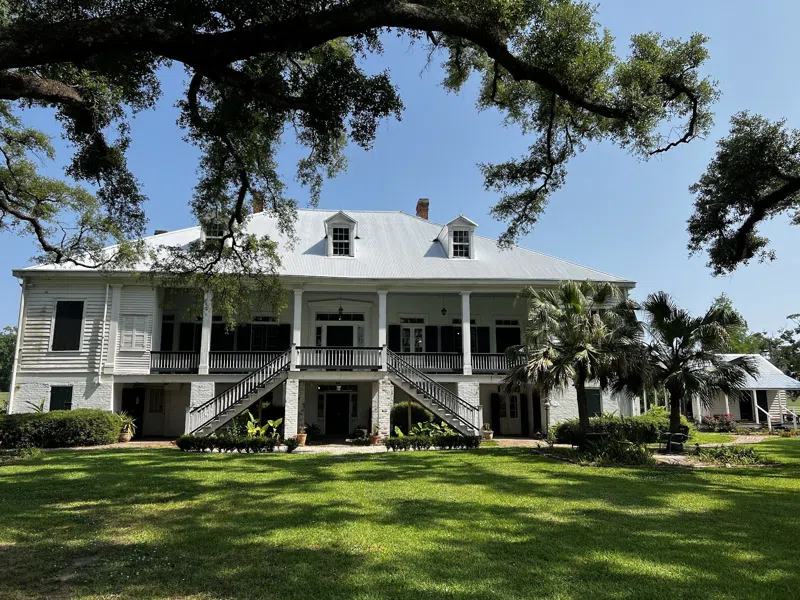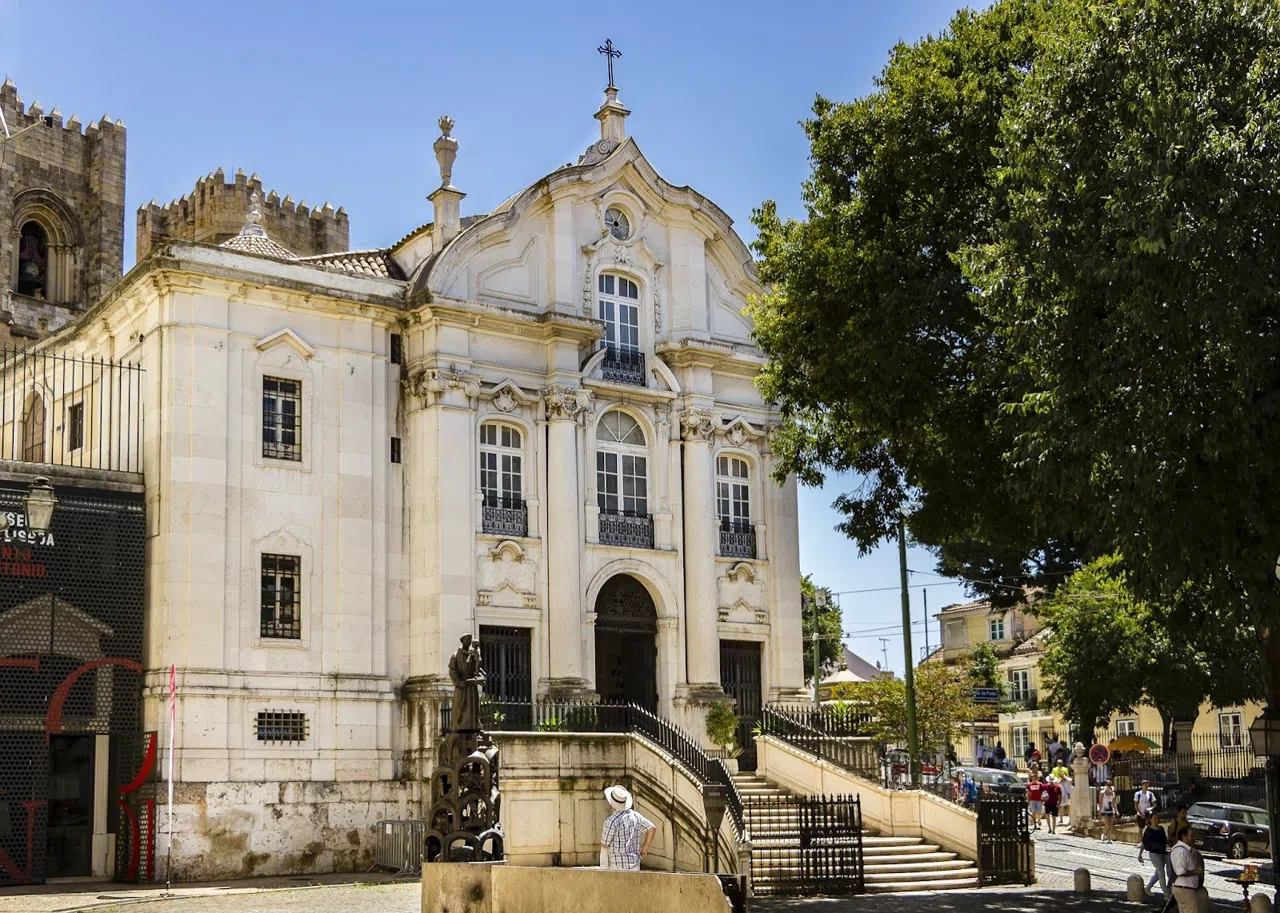

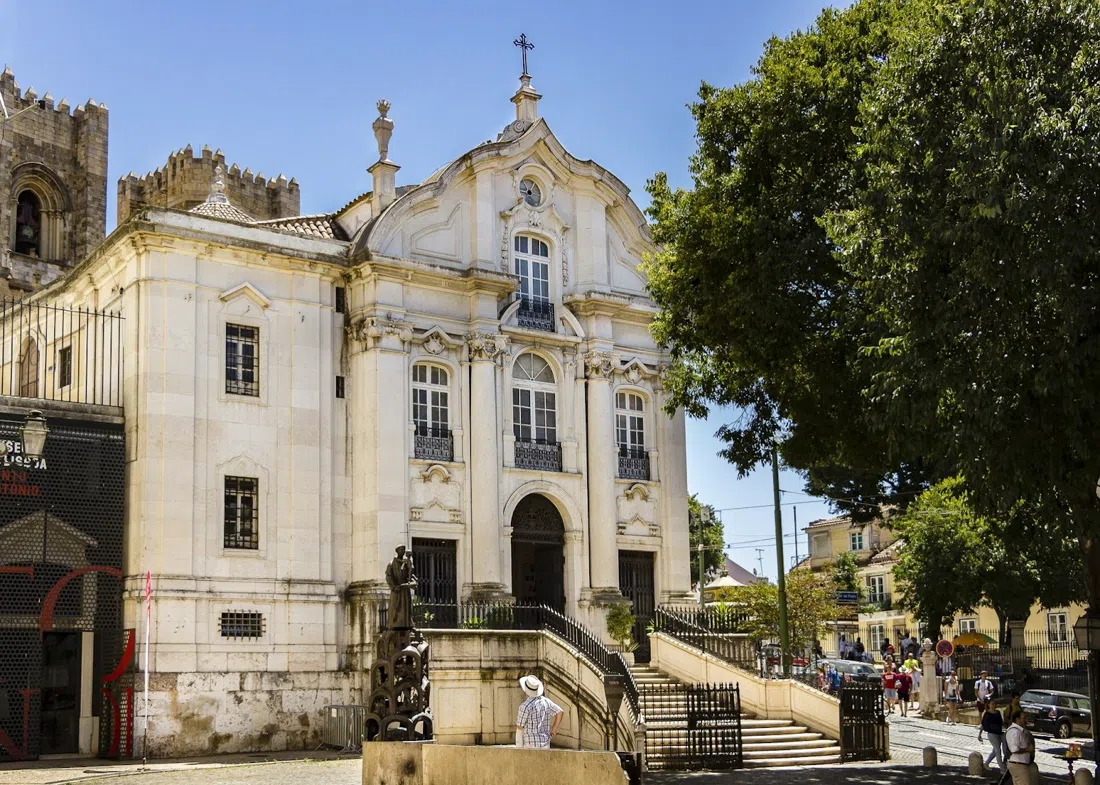
Tram 28 passes close enough to the door of this church that the glass rattles, and most people ride straight past it because the cathedral fifty metres uphill is bigger and sells tickets. Stop anyway. Under the floor is a small crypt built over the room where a Lisbon boy named Fernando was born in the 1190s. He left, joined the Franciscans, took the name Anthony and died in Italy, which is why much of the world assumes he belongs somewhere else.
What you actually see in twenty minutes
Igreja de Santo António de Lisboa (Alfama, on Largo de Santo António da Sé, directly on the tram line below the cathedral) is not a monument. It is a working parish church with a donation box and no ticket desk, and it is free to walk into, so nobody is selling you anything at the door.
The upper church is one nave, a few side altars, the gilt woodwork and blue-and-white tile you will see repeatedly in this quarter, and a statue of the saint carrying the Christ child. It takes about five minutes to read properly. The part you came for is down a short, narrow staircase: a low vaulted crypt on the ground floor of the house the family lived in. It is plain. Bare stone, a modest altar, coins and folded notes left by people asking for something. Lisbon leans on this saint for lost objects and, more stubbornly, for marriages, and you will usually find two or three people in there who are not behaving like tourists.
Candle offerings run a couple of euros from the rack. There is no audio guide, no film and no shop worth the name. Twenty minutes covers the whole building unless a Mass is running, and that is the honest measure of the place: a twenty-minute stop that anchors a two-hour walk rather than a half-day attraction. If you want the wider picture of the quarter first, the Lisbon guide sets out how the streets around it fit together.
The museum that explains why he is Lisbon's
The church tells you almost nothing about the man. Museu de Lisboa – Santo António (Alfama, in the same small square, a few steps from the church door) does, and it costs €3 for an adult, nothing for under-12s, and nothing at all if you are carrying a Lisboa Card.
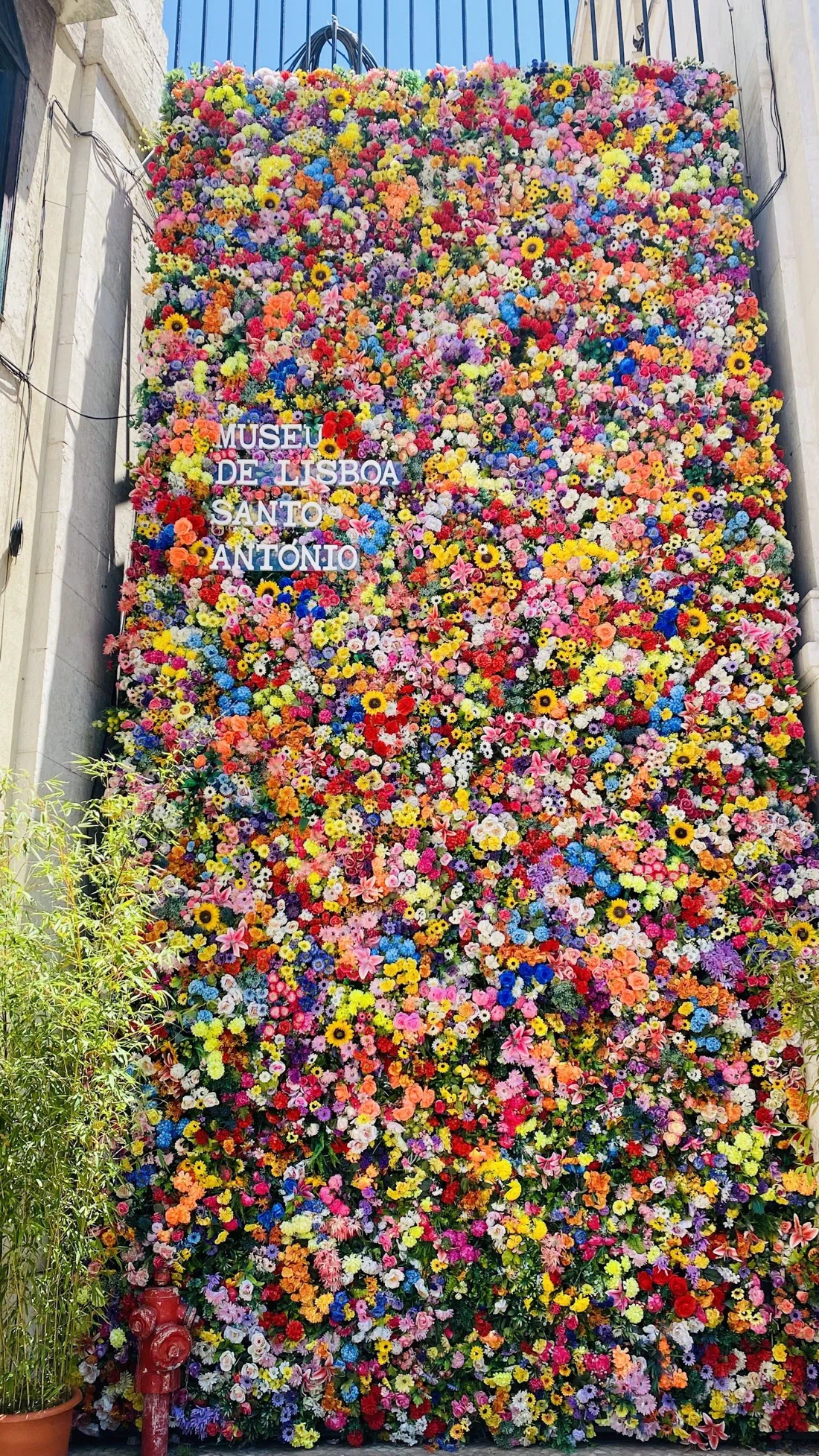
It opens Tuesday to Sunday, 10:00 to 18:00, last entry 17:30, and closes on Mondays. Pin that down, because the church is open Mondays and the museum is not, and people turn up expecting both. Allow 30 to 40 minutes. It handles the awkward part of the story: how a saint who died in northern Italy and is named for the Italian city where he is buried ended up as Lisbon's patron, and how the cult around him grew through devotional objects, prints and popular ritual rather than official decree.
The rooms are small. If you are more than about fifteen people, email ahead, because the staff will split you and you will lose twenty minutes standing on the stairs. For a couple or a family of four it is one of the better €3 spends in the city centre, and it is air-conditioned, which in the first half of September still matters.
Masses, voices and doors
The rules here are light but real. Daily Mass runs at 11:00 and 17:00, and guided groups are asked to stay outside during both. On your own you can slip in quietly, and people do, but if you arrive at 10:55 with eight friends, wait it out on the square.
In the crypt, keep your voice down. It is small enough that a normal conversation carries to everyone in the room, and at any given hour somebody in there is praying. Cover your shoulders. Nobody will stop you at the door for a vest top, but a working parish is not a museum and the staff notice.
Walk-in groups are otherwise fine. There is no ticket desk to bottleneck, which is the single biggest practical difference between this church and every paid site around it. The door opens straight onto the tram stop, so watch the kerb when you come out.
Paying at the door against booking a guided walk
There is nothing to pay and nothing to book. Say that first, because the church sits inside a dense cluster of guided products and it is easy to assume access is gated. It is not.
Guided options do exist and they are steady sellers. There are 1,584 traveller reviews across the bookable tours attached to this place, they run seven days a week, and prices start from 152 USD per person. What you get for that is a guide who can put the crypt, the cathedral and the castle into one narrative and walk you between them without you reading a map on a 12% slope. What you do not get is queue-skipping at the church, because there is no queue.
So the decision is straightforward. If you want context, a guide is a legitimate spend, though the museum across the square delivers roughly the same information for €3, silently and on your own schedule. If you want the building, walk in, put a coin in the box, and put the rest toward the paid sites up the hill, which are where the money in this quarter actually goes.
Fifty metres uphill and the Sunday problem
Sé de Lisboa (Catedral de Lisboa) (Alfama, fifty metres uphill on the same street) is the standard pairing and the standard mistake. It is €7 for an adult, €5 reduced or with a Lisboa Card, free under-7s, plus €3 if you want the audio-guide supplement. In September it runs 09:30 to 19:00, last entry 45 minutes before close, and it is closed on Sundays and holy days. Every week, people do the church, walk fifty metres up and find a locked cathedral. Group visits have to be booked ahead by email.
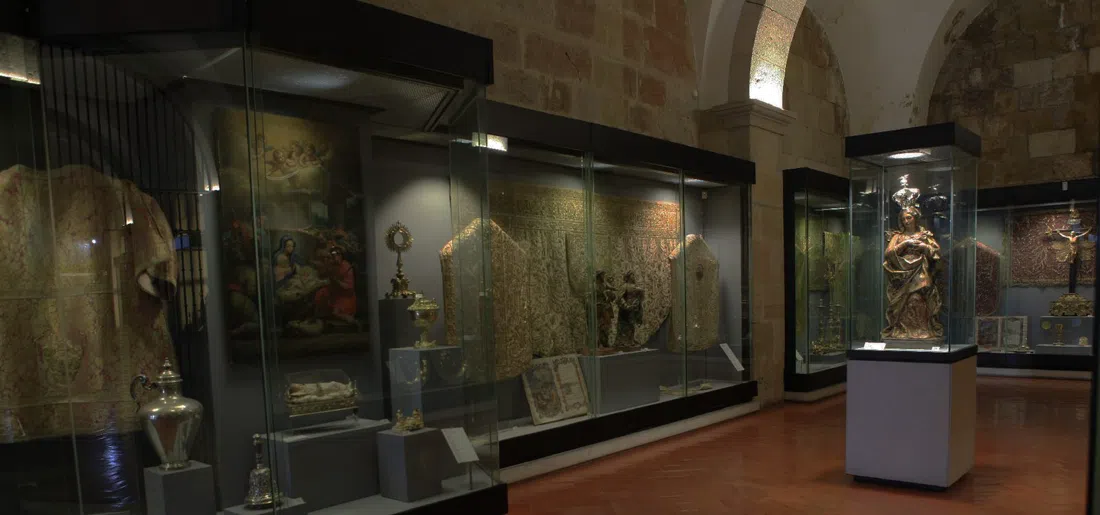
Two minutes behind the cathedral is Museu de Lisboa – Teatro Romano (Alfama, up the lane past the Sé), around €3, free with a Lisboa Card, Tuesday to Sunday 10:00 to 18:00. It is a Roman theatre under the street, it is compact, and it is almost always empty, which makes it the obvious move if the Sé ticket hall is backed up. Large groups should split or book.
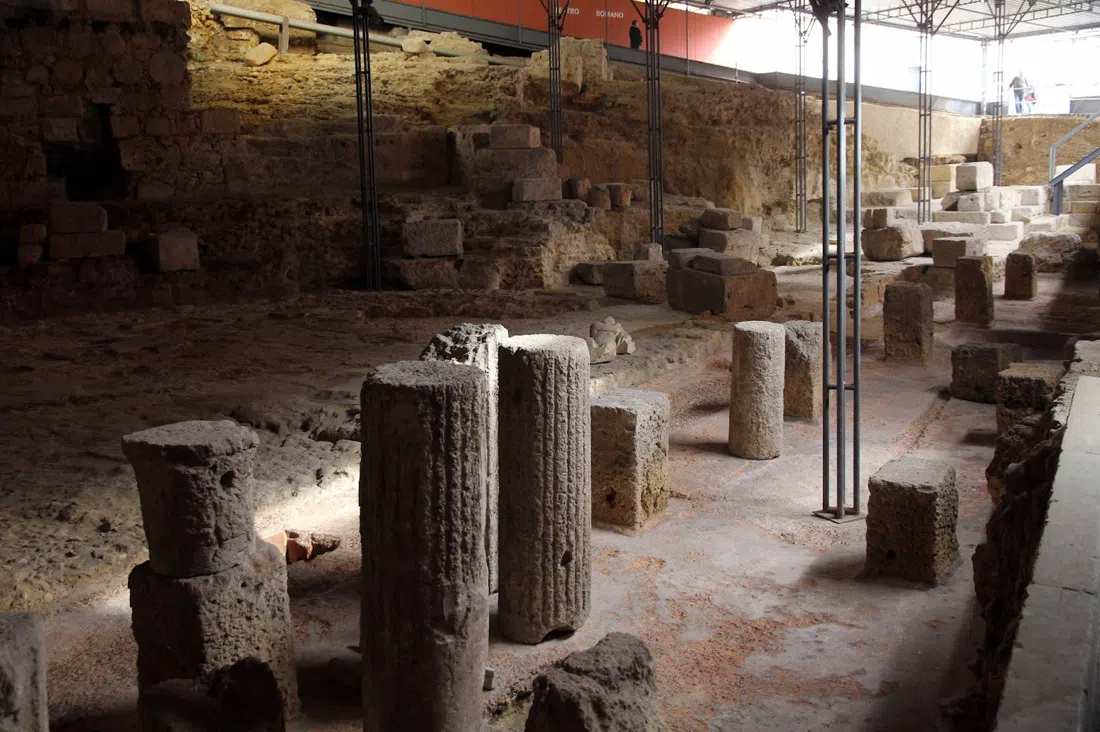
Museu do Aljube – Resistência e Liberdade (Alfama, on the road between the church and the viewpoints) is the hardest building in the quarter and the one that earns its place: a former political prison, now a museum of the dictatorship and the resistance to it, around €3, Tuesday to Sunday 10:00 to 18:00, closed Mondays, and shut 13:00 to 14:00 on a scattering of dates. After an hour of gilt it is a useful corrective. It is not a visit for young children.
Five minutes downhill toward the river, the one easy leg of the day, Casa dos Bicos – Fundação José Saramago (Alfama, Campo das Cebolas, on the riverside edge) has a facade of pyramid-cut stone that is worth the walk on its own. €3 adult, €2 student, €8 family, free under-12s and over-65s, guided visit €6. Monday to Saturday 10:00 to 18:00, closed Sundays, groups by appointment.

The climb above the church
Everything from here involves gradient. From the church door to the viewpoints is about ten minutes of steady uphill on worn limestone that is slick in the morning damp. Flat soles will slide.
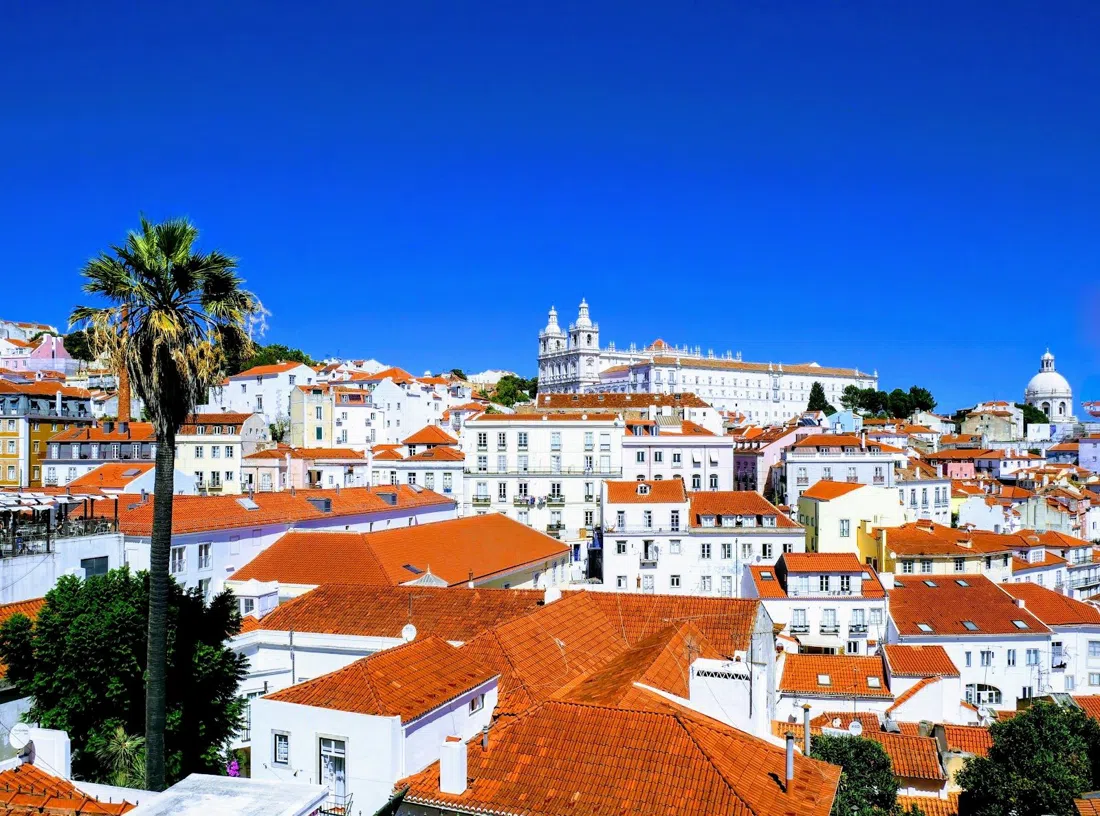
Miradouro de Santa Luzia (Jardim Júlio de Castilho) (Alfama, on Rua do Limoeiro) comes first, a narrow terrace with tiled panels and a pergola over the rooftops. Free, open at all hours. Some of the tile panels are visibly weather-damaged. The terrace really is narrow, so if you are walking with a group, brief people before you arrive rather than letting eight of you block the rail.
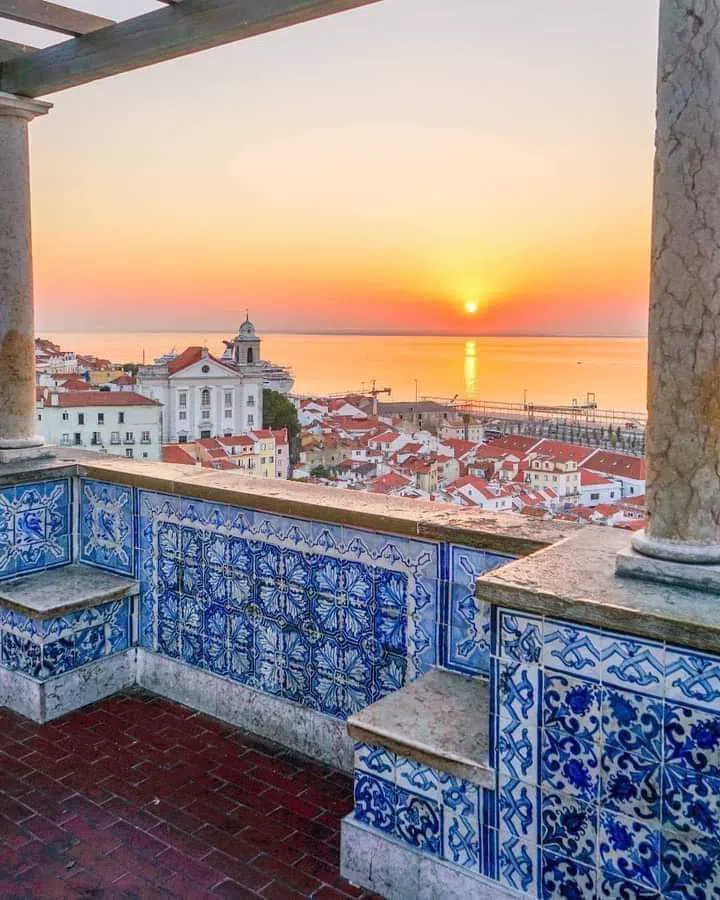
Thirty metres further is Miradouro das Portas do Sol (Alfama, on the tram line), the wide view down over the rooftops to the river that most people have already seen on a screen. Free, 24 hours, with a kiosk below running roughly 09:00 to 22:00 and drinks at €3 to €6. Seating is first-come. In September, arrive before 10:00 or after 19:00 if you want the balustrade to yourself.
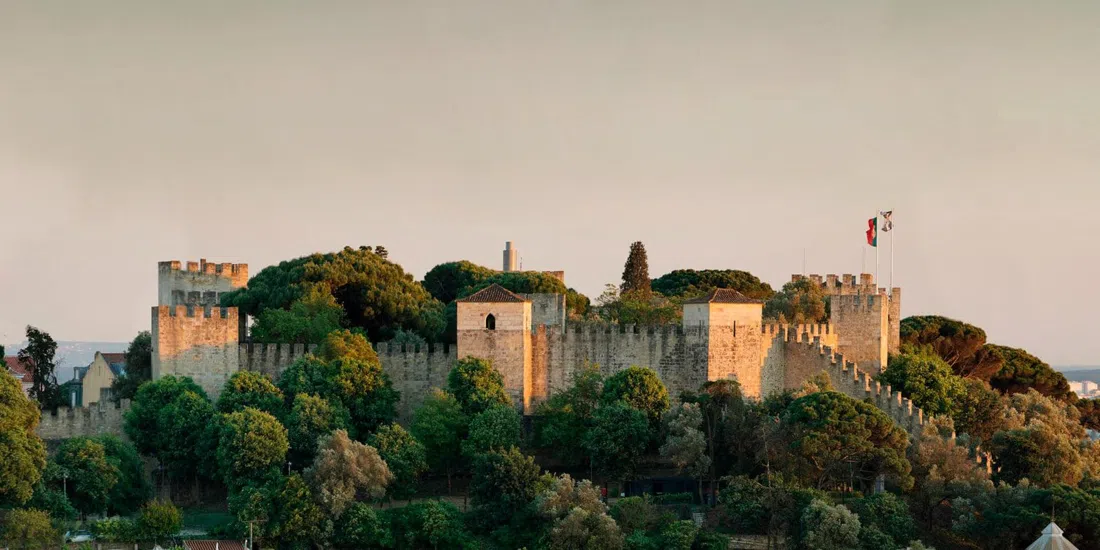
Castelo de São Jorge (Alfama, at the top of the hill) is the expensive one: €17 adult, €14 over-65, €8.50 for ages 13 to 25, free under-12s, free with a Lisboa Card, open daily 09:00 to 21:00 through September. It is also the only site nearby where a pre-booked timed slot saves you standing in direct sun; official online sales go through BOL. Large groups and school parties should contact the castle in advance and may have entry times staggered.
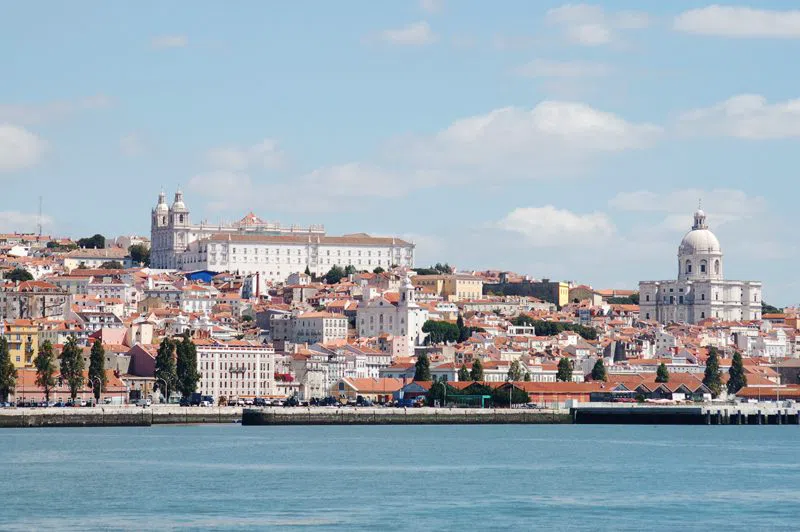
Fifteen minutes uphill in the other direction, Mosteiro de São Vicente de Fora (Graça, above Alfama) holds the longest run of eighteenth-century tile panels you can reach on foot from the church. €8 adult, €6 over-65 or Lisboa Card, €4 under-25, free under-12s, guided tour €4 more, open daily 10:00 to 19:00 in September. Allow 60 to 90 minutes and finish on the roof.
Downhill through the lanes instead and you reach Museu do Fado (Alfama, near the Santa Apolónia side), €5 adult, €4 over-65, €2.50 for ages 13 to 25, free under-12s, Tuesday to Sunday 10:00 to 18:00. An hour there, with the listening stations, will teach you more than a €60 tourist dinner with a floor show. Group visits go through the education department; wheelchairs are available.
Eating and drinking within five minutes
Pastelaria Santo António (Alfama, ninety seconds from the church door) sells a pastel de nata that won the city's prize in 2019, at €1.50 to €4 a pastry with coffee around €1 to €2. It is open daily, roughly 08:00 to 21:00, and it is tiny, so order at the counter and eat standing rather than trying to seat a party of eight. It also saves you the tram ride west for the same thing.
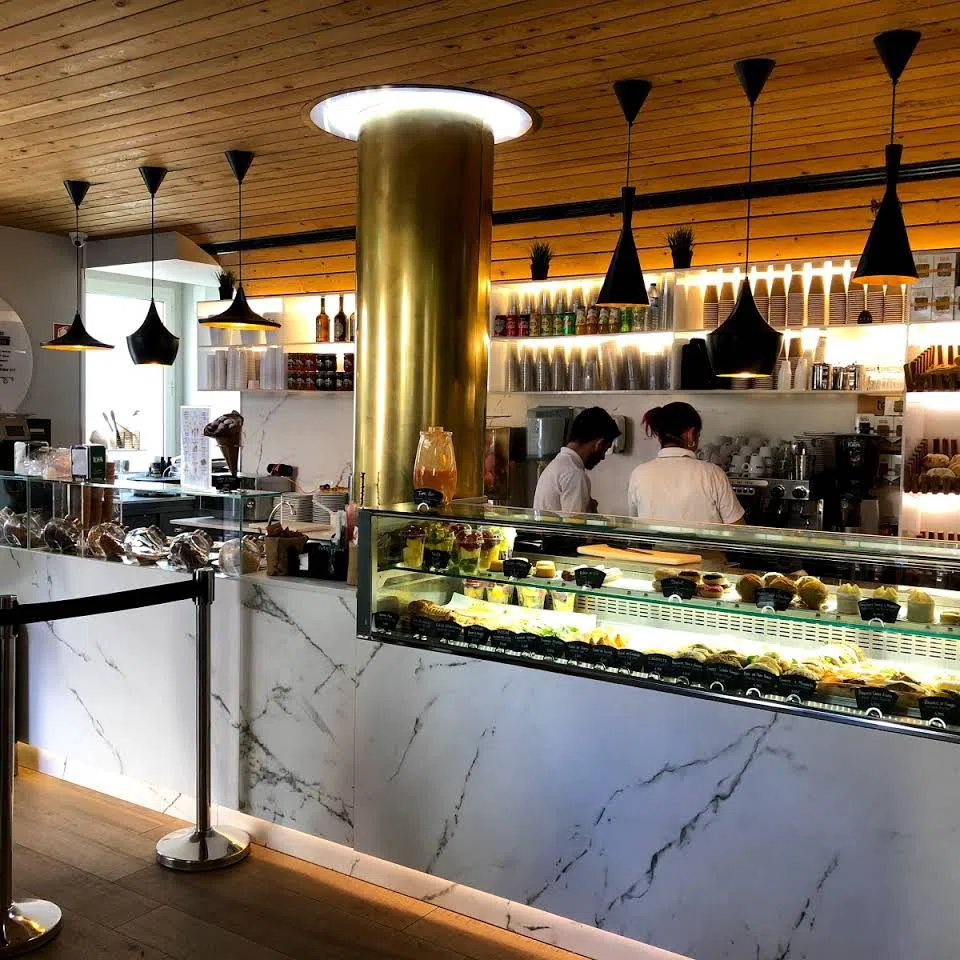
Pois, Café (Alfama, Rua São João da Praça, between the church and the cathedral) is the sit-down option when everywhere else is a standing counter. Austrian-run, laptop-tolerant, sofas, €8 to €16 a plate and coffee at €2 to €3. Monday 12:00 to 23:00, Tuesday to Sunday from 10:00. No reservations at peak brunch, and it is not set up for coach parties, but it is relaxed about ordinary groups and it has real table space.
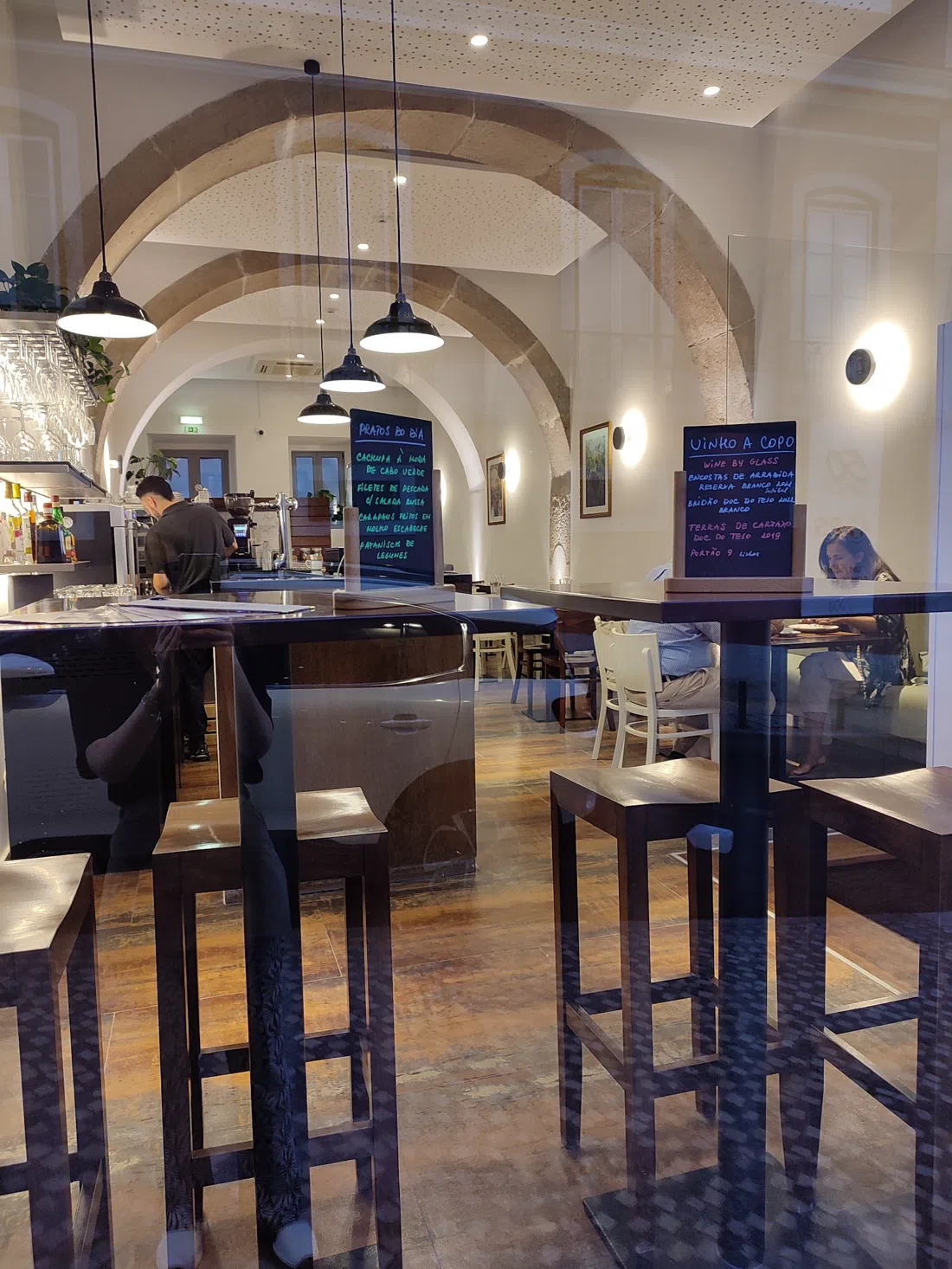
Chapitô à Mesa (Costa do Castelo, ten minutes uphill from the church) is run by a non-profit circus school that trains young people, so the money does something useful. €20 to €40 a head for dinner, less for drinks and petiscos, open from midday daily. Book by phone for groups, and ask explicitly for the upper terrace, because the inside room has none of the view.
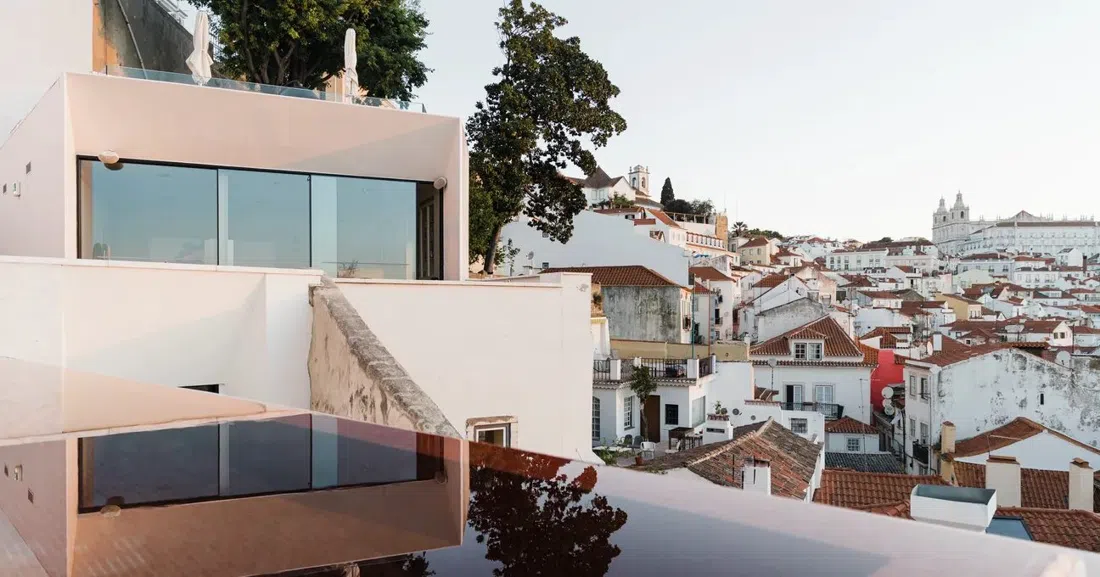
Wine Bar & Terrace, Memmo Alfama (Alfama, three minutes from the church) opens to non-guests daily 12:00 to 23:00, with cocktails at €12 to €16, wine by the glass €6 to €10 and tapas €8 to €15. It is small, so go early rather than at 19:30. There are no individual reservations at dinner; group bookings go through the hotel's terrace address. The red pool is for hotel guests only, whatever the photographs suggest.
Best time to go in September 2026
September is the right month for this walk. The saint's feast fills these streets in June; by September the bunting is down, the sardine smoke has cleared and the church is back to being a parish church. Daytime highs still sit in the high twenties in the first fortnight, so the heat, not the crowd, is what will shape your day.
Go at 08:30. The church opens around 08:00 on weekdays and closes about 19:00, with weekends running to 20:00, and the first hour is when the crypt is quiet and the lane outside is not yet a queue of tuk-tuks. That also puts you at the viewpoints before 10:00, which is the cut-off for having the rail to yourself.
Avoid 11:00 and 17:00 unless you are attending Mass. Avoid Monday if you want the museums: the church is open, but Santo António, the Teatro Romano, the Aljube and the Fado museum all close. Avoid Sunday if the cathedral matters to you, and remember Casa dos Bicos is shut Sundays too. That leaves Tuesday to Saturday as the clean window, with Tuesday and Wednesday the calmest.
Late afternoon is the alternative: the light on the tiles at Santa Luzia from about 18:30, then a drink three minutes downhill, then dinner. It is a better evening than it is a morning, but you will share it with more people.
Is it worth it
As a standalone attraction, no. It is a small free church you will finish in twenty minutes, and nobody should cross the city for it. As the first stop of a morning, yes, clearly. It is the one building in this quarter that explains why the quarter exists, it costs nothing, it needs no booking, and it sits at the exact point where the flat riverside streets turn into the hill.
It suits almost everyone: couples, solo walkers, families with young children who will not last an hour anywhere, and older visitors who want something meaningful that does not involve a climb. It suits groups less well only in the crypt, which fills at about eight people. If you are travelling with someone with limited mobility, this is the accessible half of Alfama: church, museum, cathedral and Casa dos Bicos are all on the lower ground, and everything above Santa Luzia is not.
Practical notes
Carris Tram 28 (Sé / Largo de Santo António stop) (Alfama, the stop is at the church door) is the cheapest way to arrive and the most reliable way to get pickpocketed. A single bought onboard is €3.30; the same ride is €1.90 for 60 minutes on a Navegante/Viva Viagem card, and a 24-hour Carris/Metro pass is €7.25. Buy the card fare. Cars fill at Martim Moniz and Praça da Figueira, so there is no group capacity at all: split up or walk. Ride before 09:00 if you want a seat.
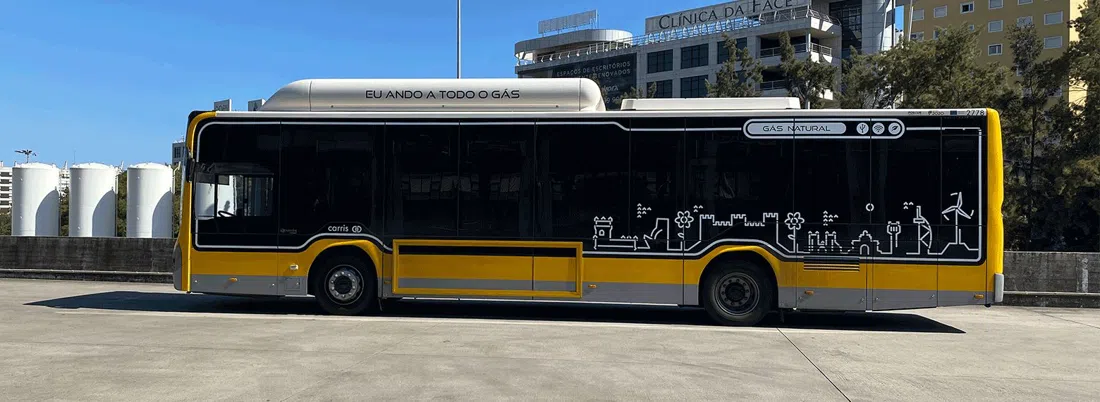
Carry some cash. The church takes coins in a box and sells candles for a couple of euros, the smaller museums and the pastry counter are quicker in cash, and the kiosk at the viewpoint is cash-friendly. Everything paid takes cards.
Budget, per person, for a full day here: €0 for the church, €3 for the Santo António museum, €7 for the cathedral, €3 for the Teatro Romano and €3 for the Aljube, about €16 of admissions, plus €7.25 of transport and roughly €10 for pastries and coffee. Add the castle at €17 and São Vicente at €8 and you are near €50. A Lisboa Card covers the two €3 museums, the castle and the reduced cathedral rate, and pays for itself if you do three or more.
Stay on the lower Alfama streets or just west toward Baixa if you want to do this walk at 08:30 without a taxi first; the Lisbon hotel search will show what is within ten flat minutes. And wear something with grip: the limestone here is polished, and September mornings leave it damp until the sun clears the rooftops.