
Lisbon's monuments sit in a tight band along the river and up through the Baixa, and most people finish them in three days. What is left over is a bigger city that keeps shop hours rather than ticket times, flat where you would not expect it and vertical where you would. What follows is six walks, each one or two hours on foot, each ending somewhere you would want to sit down. For the monuments themselves, the Lisbon guide covers them.
The flat grid at Campo de Ourique
Tram 28 finishes its western run at the gates of the Prazeres cemetery. Most passengers step off, photograph the tram, and get back on. Walk instead. Inland from the terminus, Campo de Ourique is laid out as a grid on level ground, which makes it the simplest neighbourhood in the city to wander without a plan: nothing sits more than about 600 m from anything else, and you will not climb once.
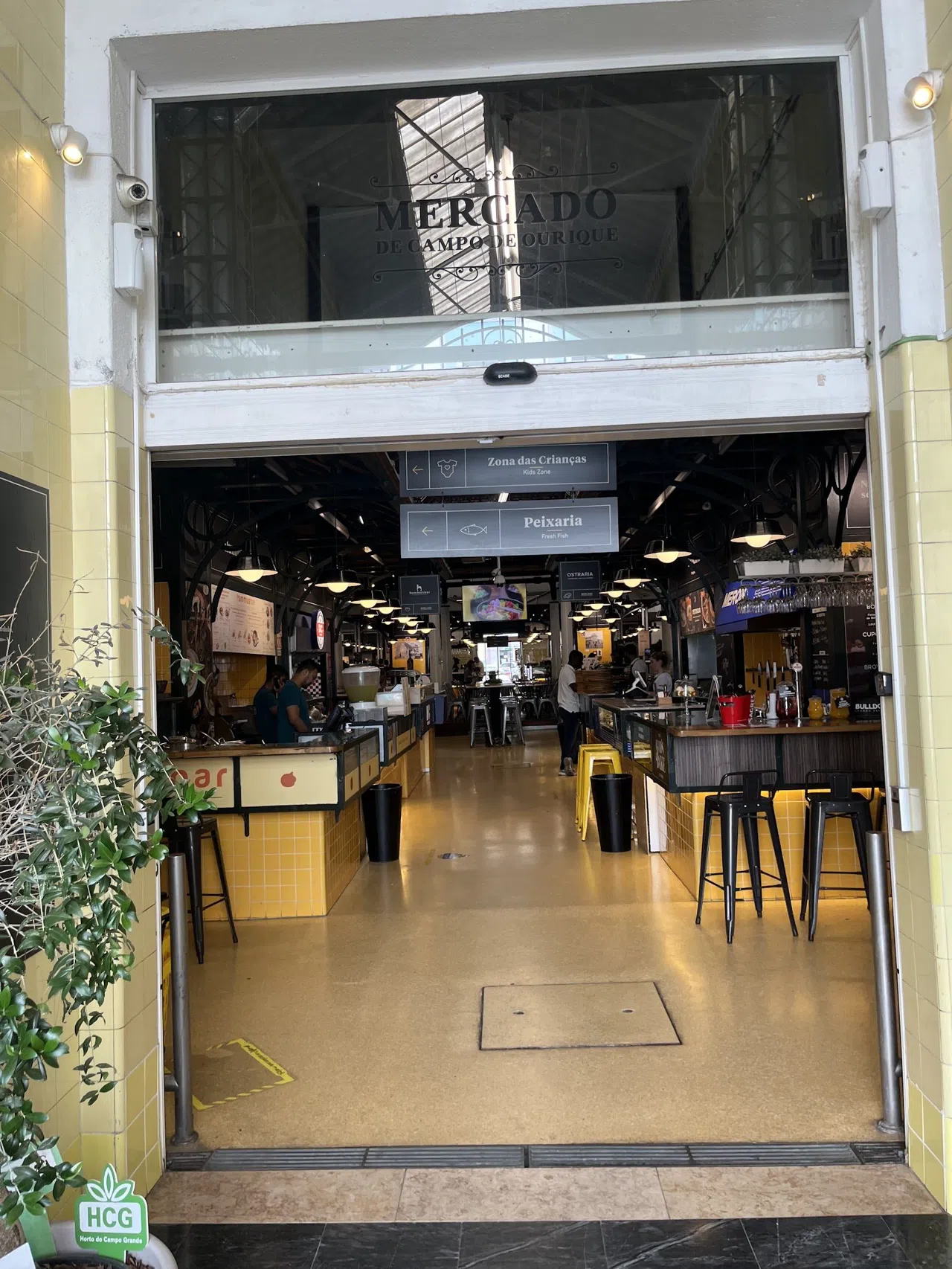
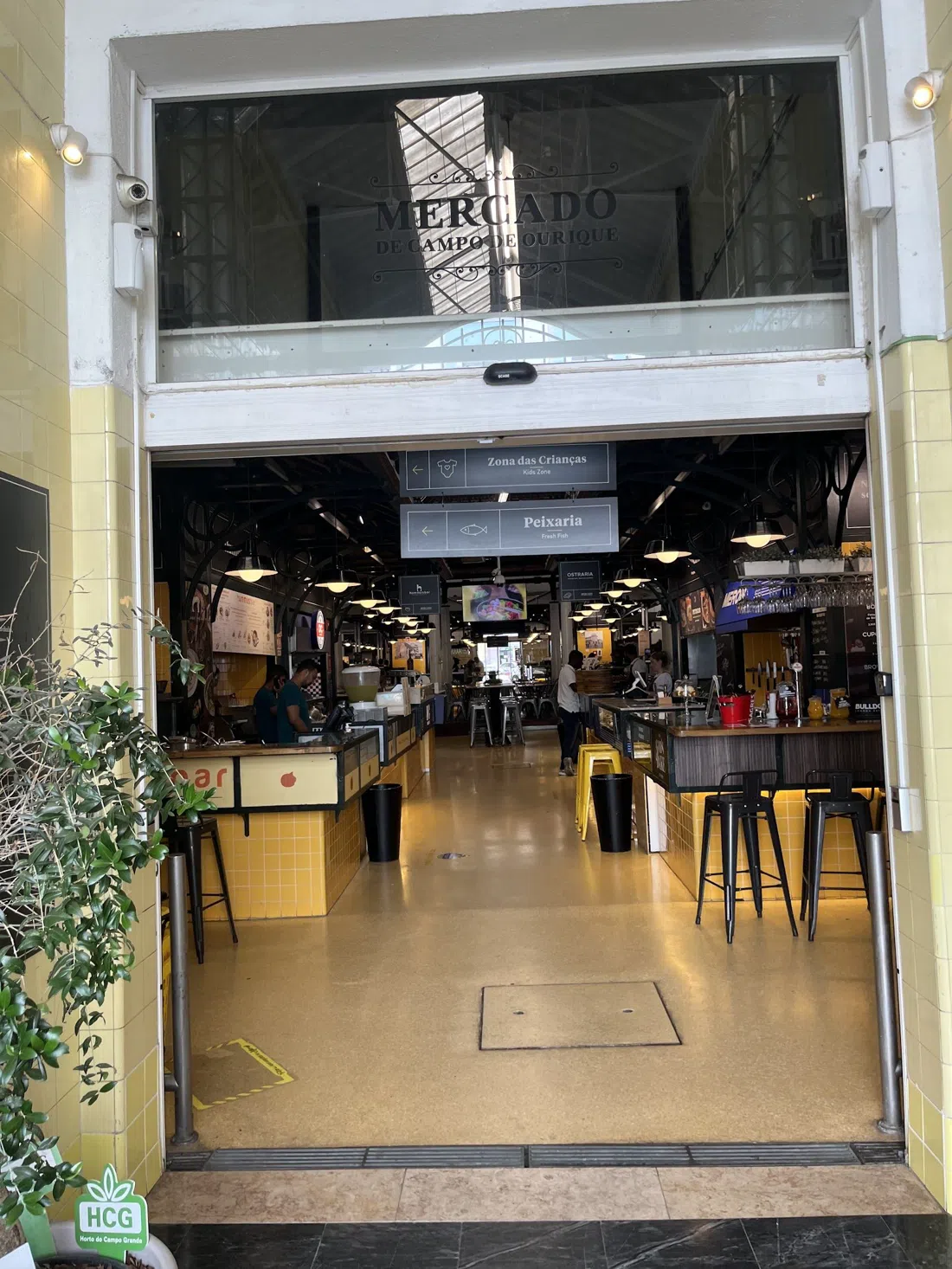
Mercado de Campo de Ourique (Campo de Ourique) is roughly 600 m in from the tram, and mornings are when it is still a market. Produce stalls trade from early, and the food counters woke up around them rather than the other way round. Come before noon and you will see fish, vegetables and a handful of people doing their actual shopping. Arrive at 13:30 and you are in a food hall with a queue at every counter. Plates run €5-15, beer €2-3, and there are no bookings and no need for them. The communal tables absorb a group of six to ten if you are willing to split across two benches and eat in shifts, which between 13:00 and 15:00, and again after 20:00, is the only way it works. The market's old web address is now a squatted gaming content farm, so ignore whatever you find there and simply turn up.
Three or four blocks away, Pastelaria Aloma (Campo de Ourique) has held its corner since 1943 and has taken the city's best-pastel-de-nata title in 2012, 2013, 2015, 2024 and again in October 2025. None of that has turned it into an attraction. It is a counter, a small room, a till, and a pastel de nata at €1.40-2 with coffee at €0.90-1.80. Four to six of you can stand at the counter without causing a problem. More than that and the polite move is to buy the tarts and eat them on the pavement, which is what half the queue does anyway.

A long walk down through Necessidades
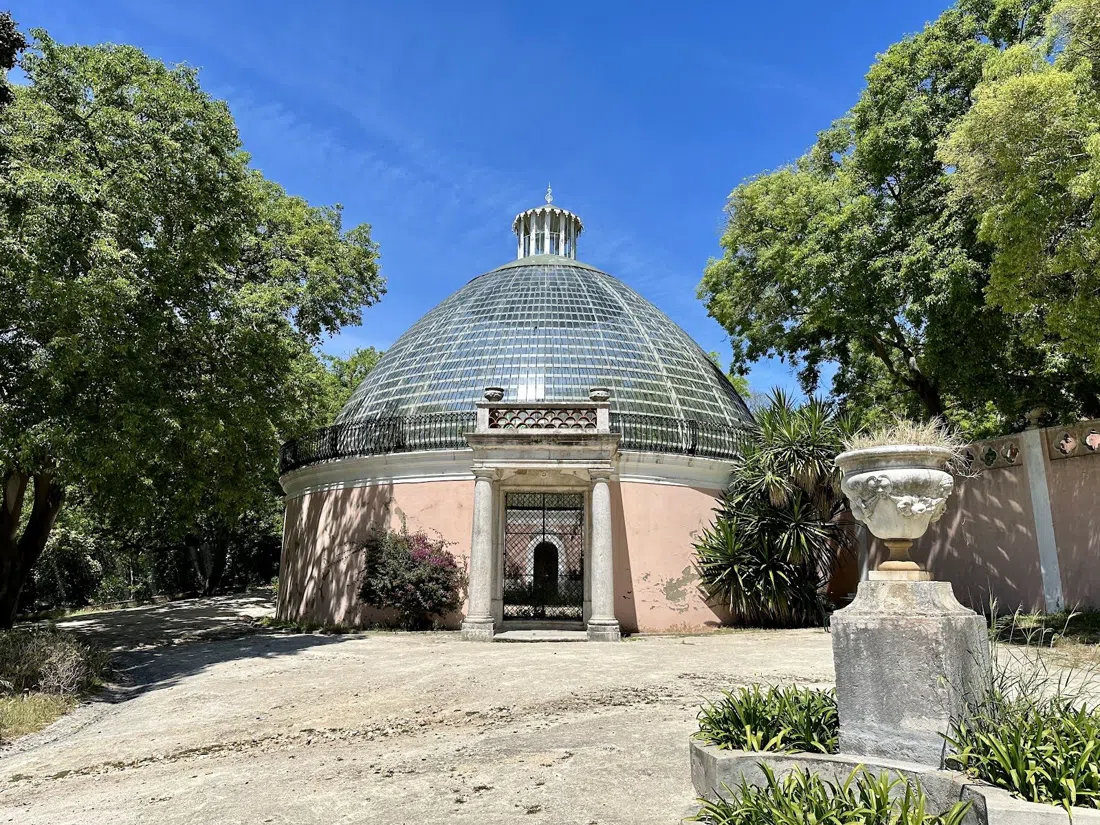
From Campo de Ourique you can drop southwest into Tapada das Necessidades (Necessidades) in about 1.5 km, downhill nearly the whole way. Remember that, because the return is not. These are former royal grounds and they have been left deliberately unmanicured: gravel and broken tarmac underfoot, long lines of old trees, deep shade, and very little sign that anyone is managing the experience. It is free, unfenced to walkers, and takes any number of people, but there are no facilities to speak of, so bring water and whatever you plan to eat. Hours are roughly 08:00-18:00 in winter and to 19:00 in summer, opening at 10:00 at weekends. You can walk it with nowhere in particular to get to, and an hour disappears easily.
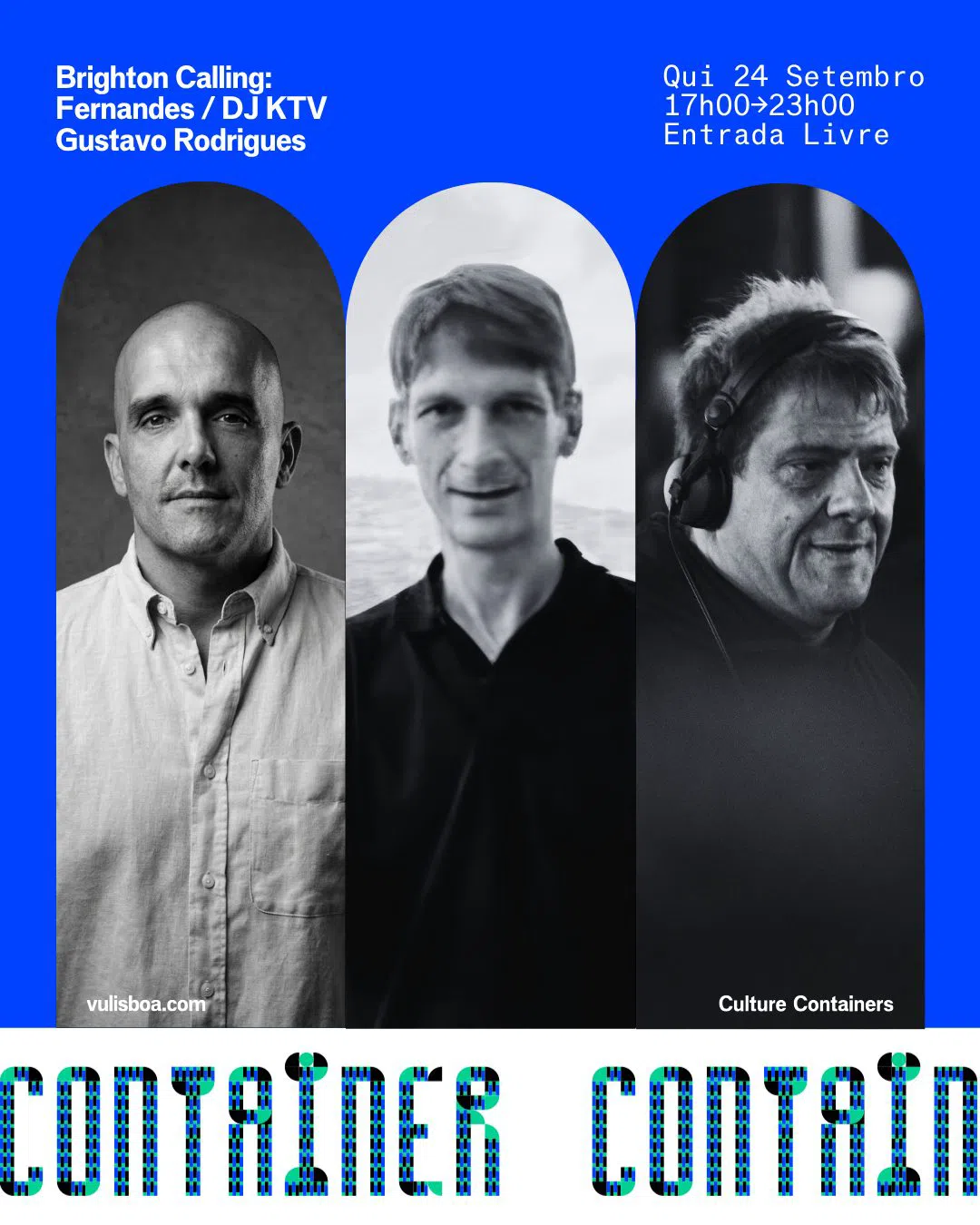
If your legs are willing, carry on down. Another 1.5 km, steep in stretches and awkward on cobbles, brings you into Alcântara and Village Underground Lisboa (Alcântara): fourteen shipping containers and two buses converted into studios, a café and a gig warehouse. The café and the yard are open to anyone at €3-12, event tickets run €8-20, and the warehouse and rooms take large groups or private hire. It is a short hop from the LX Factory crowds and feels nothing like them. Check what is programmed before you commit to the walk out, because on a quiet afternoon it is a coffee in a yard, which may be exactly what you want after Necessidades.
The glasshouses at the top of Parque Eduardo VII
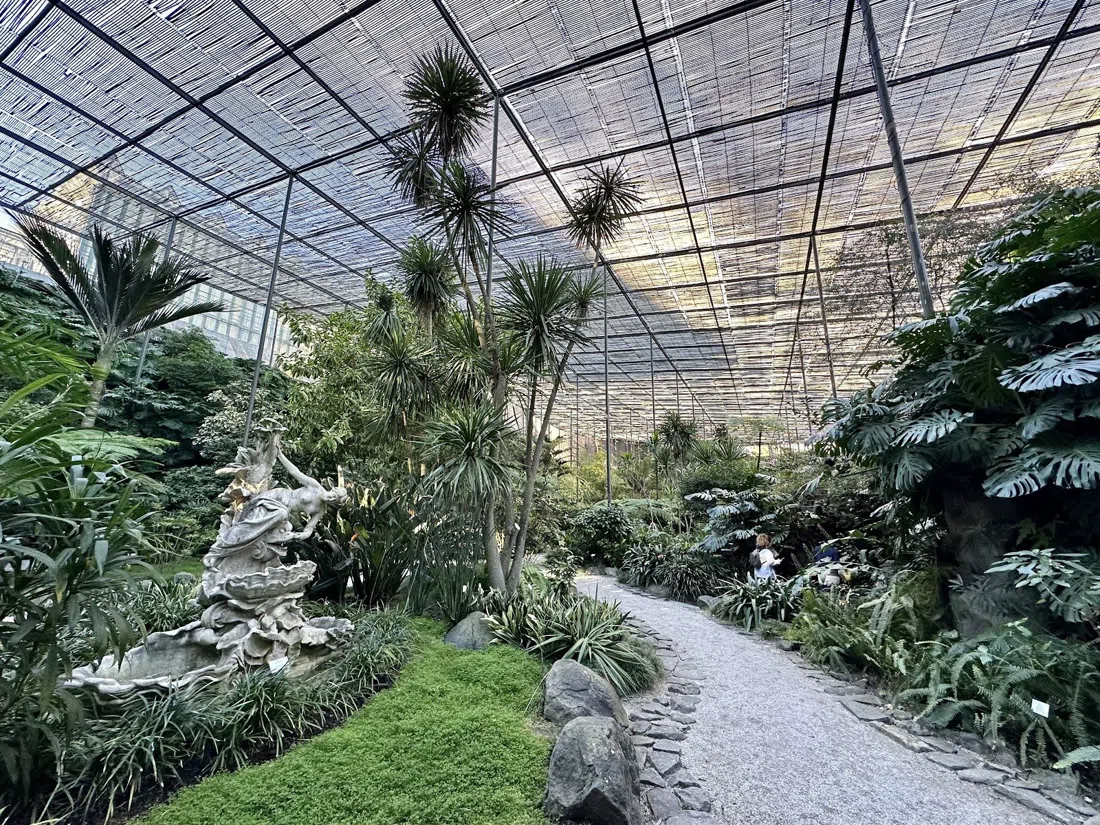
Everybody photographs Parque Eduardo VII from the bottom, standing at Marquês de Pombal and looking up the lawn. Almost nobody walks the 700 m to the top, which is a steady but not punishing climb up either flank. Estufa Fria (Parque Eduardo VII) is waiting up there: three linked greenhouses (the cold, the hot and the sweet) built into a former quarry, with ponds, ferns and a lot of dripping stone. Entry is €3.10, €1.55 concessions, free under six, open Monday to Saturday and roughly 10:00-19:00 in summer. It handles groups without trouble, and concerts and events are staged inside the houses, so look at what is on. Give it an hour, longer in rain, when it is one of the few outdoor-feeling places in the city that stays comfortable.
Avenida da República and the Alvalade grid
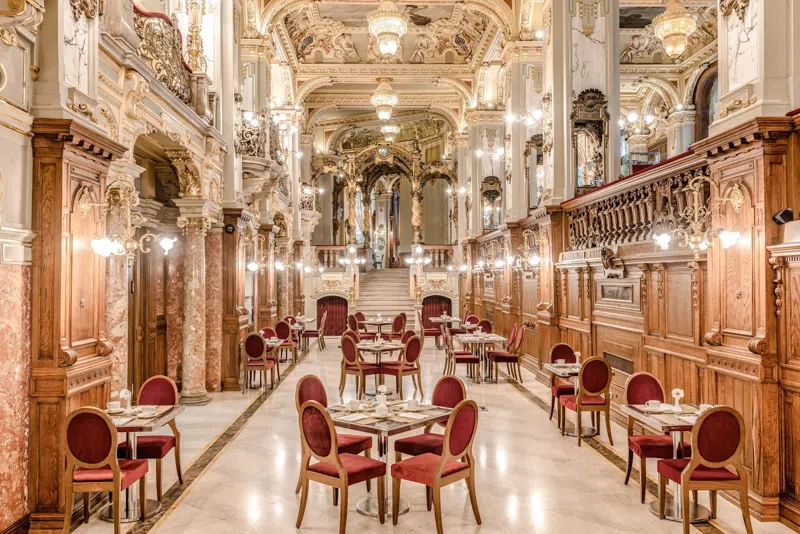
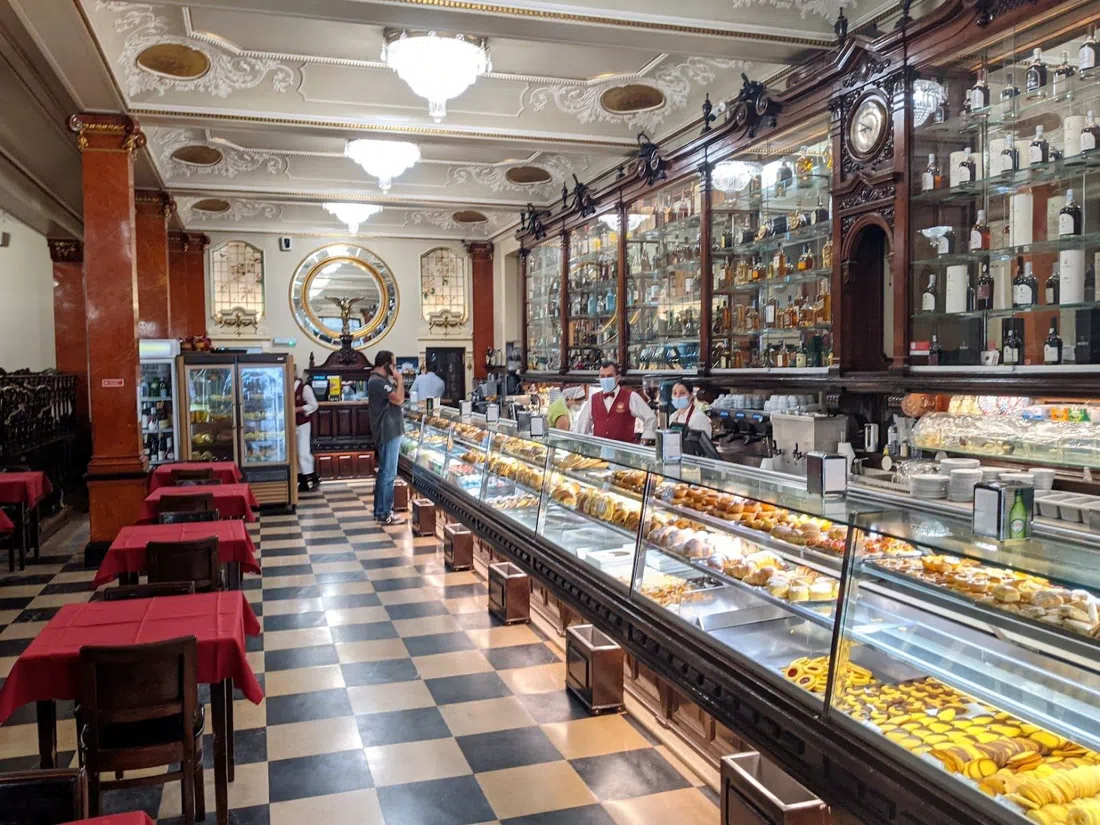
A kilometre east and north of the park, on entirely flat ground, Pastelaria Versailles (Avenidas Novas) sits on a stretch of Avenida da República that visitors pass on the metro instead of on foot. It is a belle-époque room with mirrors, plasterwork and proper table service, and it is a protected heritage shop, but at 10am it is still pensioners and office workers reading newspapers. Coffee and cake come to €5-9, lunch €15-25. Groups are seated without fuss; book ahead for eight or more. Saldanha is the nearest metro.
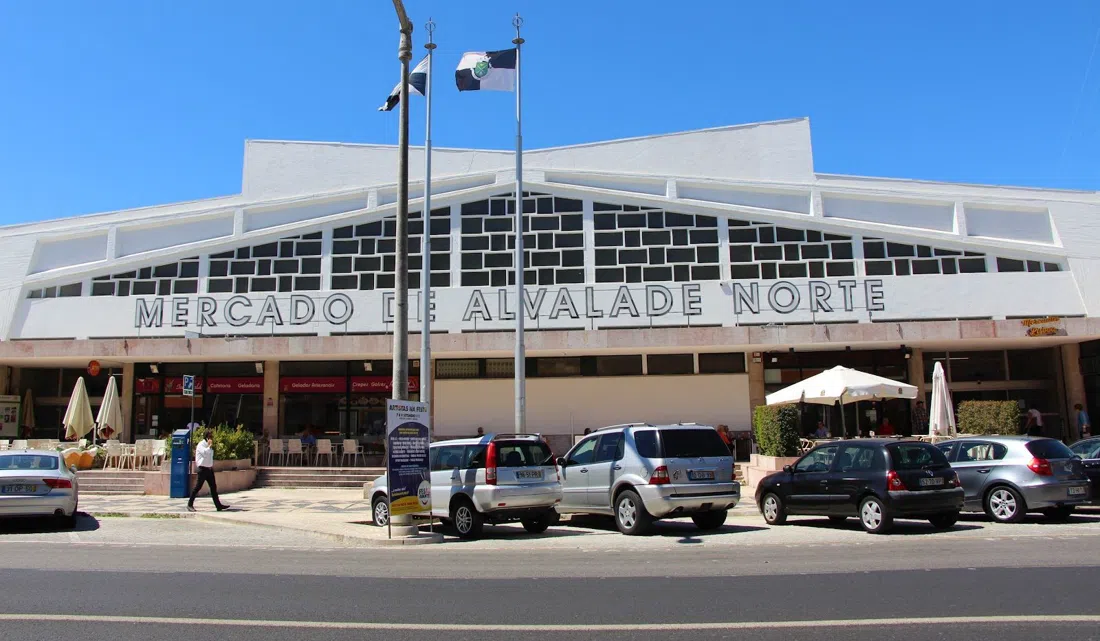
Keep going north and the avenue runs into Avenida de Roma, about 2 km, level the whole way, or one short metro hop to Alvalade if you would rather save the legs. Mercado de Alvalade Norte (Alvalade) was founded in 1877 and rebuilt into the Alvalade grid, and it is a shopping market, not somewhere to spend an afternoon. Browsing is free, snacks run €2-8, and the hours decide your visit: Monday to Friday 07:30-14:00, Saturday to 16:00. Arrive after 12:00 and the stalls are already packing down. Go with two or three people and give it twenty minutes as part of a walk around the neighbourhood, not as a destination in itself.
Tuesday and Saturday on Campo de Santa Clara
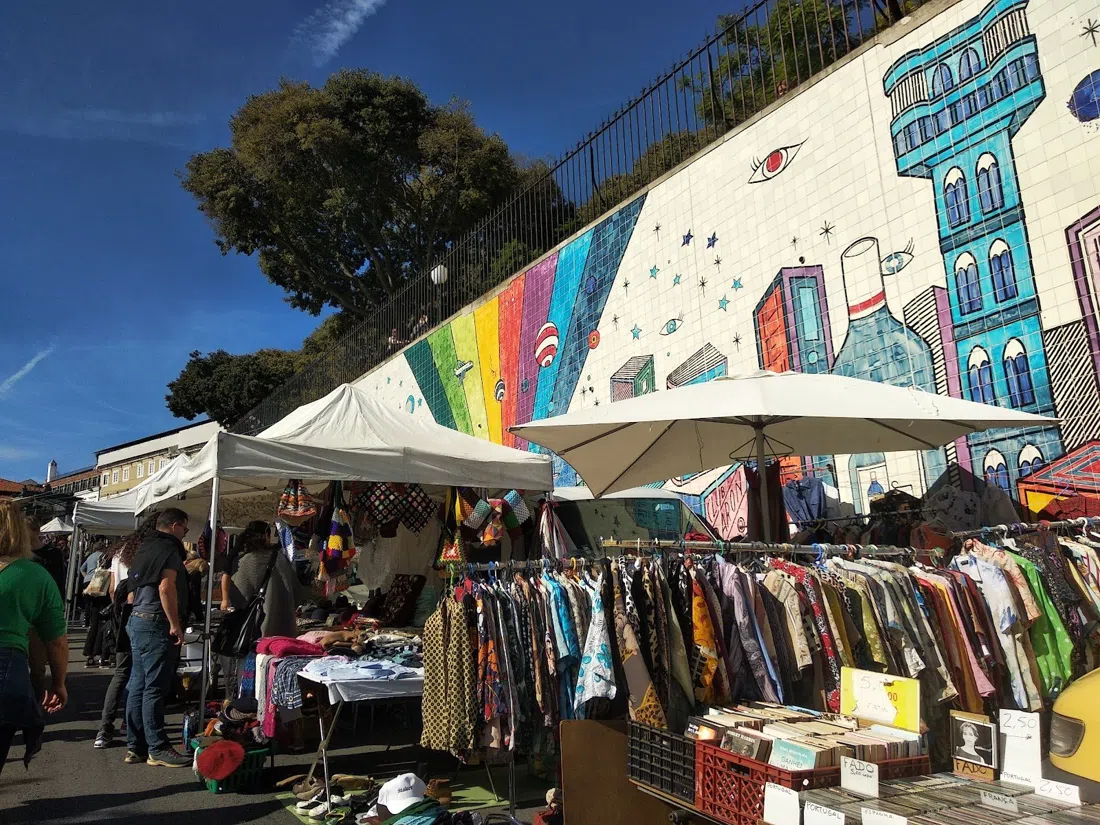
Feira da Ladra (Campo de Santa Clara) only happens twice a week, Tuesday and Saturday, from around 08:00 until vendors pack up in the early afternoon. Tuesday is the calmer browse with fewer stalls; Saturday has more of everything, including people. Entry is free, most stalls sell between €1 and €30, and there is no limit on your numbers, but the aisles are narrow and standing six abreast in front of a table of old keys makes you the problem. Keep moving and split up.
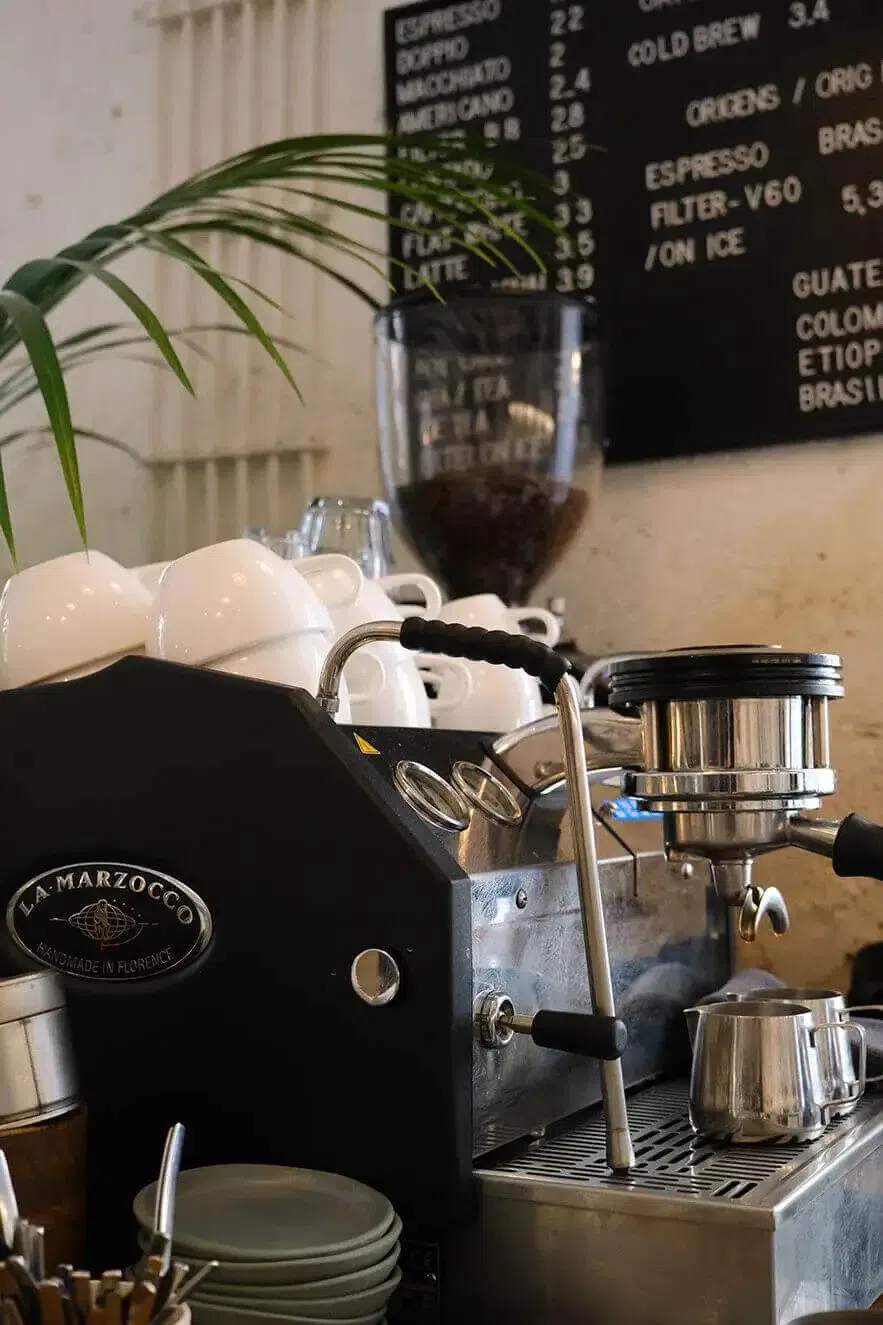
On the same square, Hello, Kristof (Campo de Santa Clara) is the Alfama branch of a three-shop specialty coffee operation; the others are in São Bento and on Rua do Poço dos Negros in Bica. Coffee is €2-4.50, brunch plates €8-14. The rooms are small and there are no reservations: two to four people are comfortable, six is awkward for everyone including the staff. It is thirty seconds from the flea market, so do the two together.
Up to Graça, then down into Mouraria
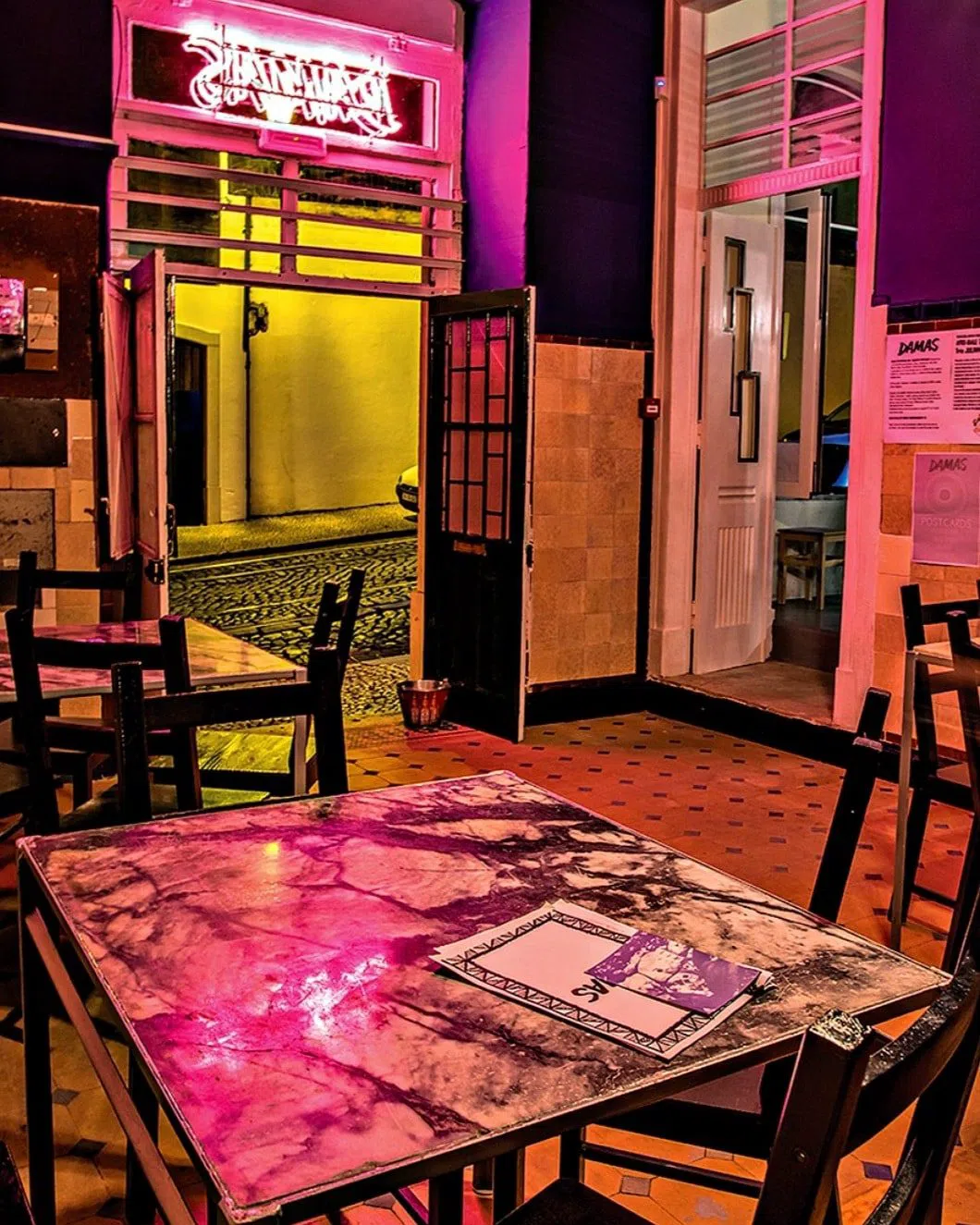
From the flea-market square it is about 300 m uphill to Damas (Graça) on Rua da Voz do Operário: kitchen, bar and a small concert room in one building, open since 2015 and still programming, with concerts listed into September 2026. Drinks are €3-7, plates €8-15, gigs usually €5-12. It is closed Mondays. Early evening a group fits easily; on a gig night the room is standing and a party of eight will end up in three pieces, so decide which of those two evenings you came for.
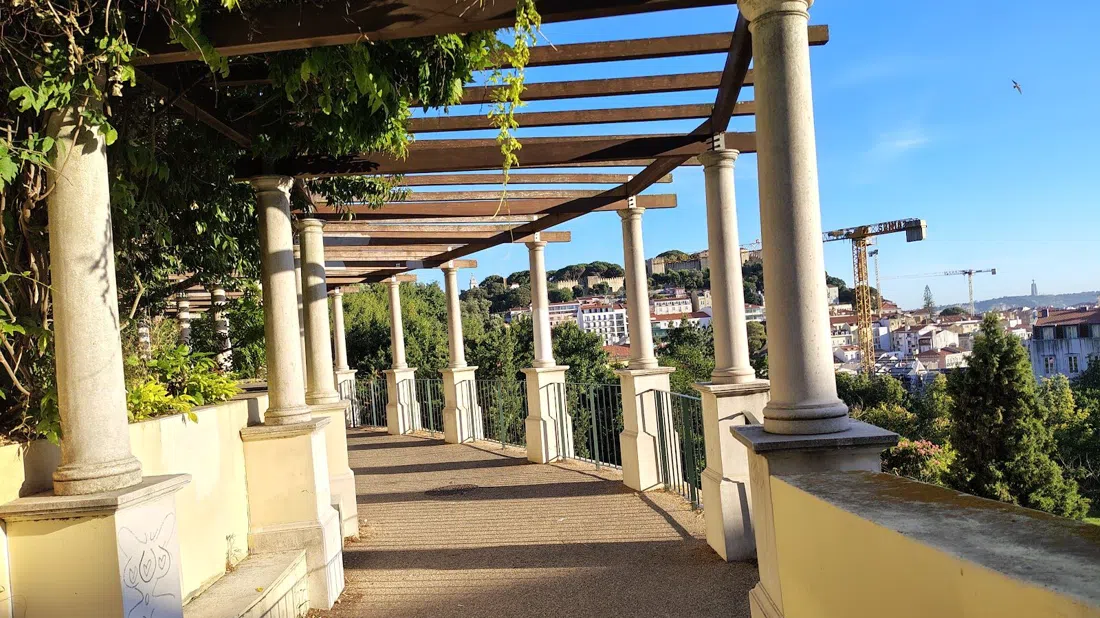
Another 400 m and you reach Jardim da Cerca da Graça (Graça), a walled park slotted into the hillside below the Graça viewpoints. This is the castle view without the castle queue: terraced lawns, olive trees, and a kiosk café with a terrace selling coffee and beer at €1.50-4. It is free, open around the clock, and takes any number of people. Use the entrance off Calçada do Monte rather than the one nearer the square. It is quieter, and it puts the view in front of you as you walk in.
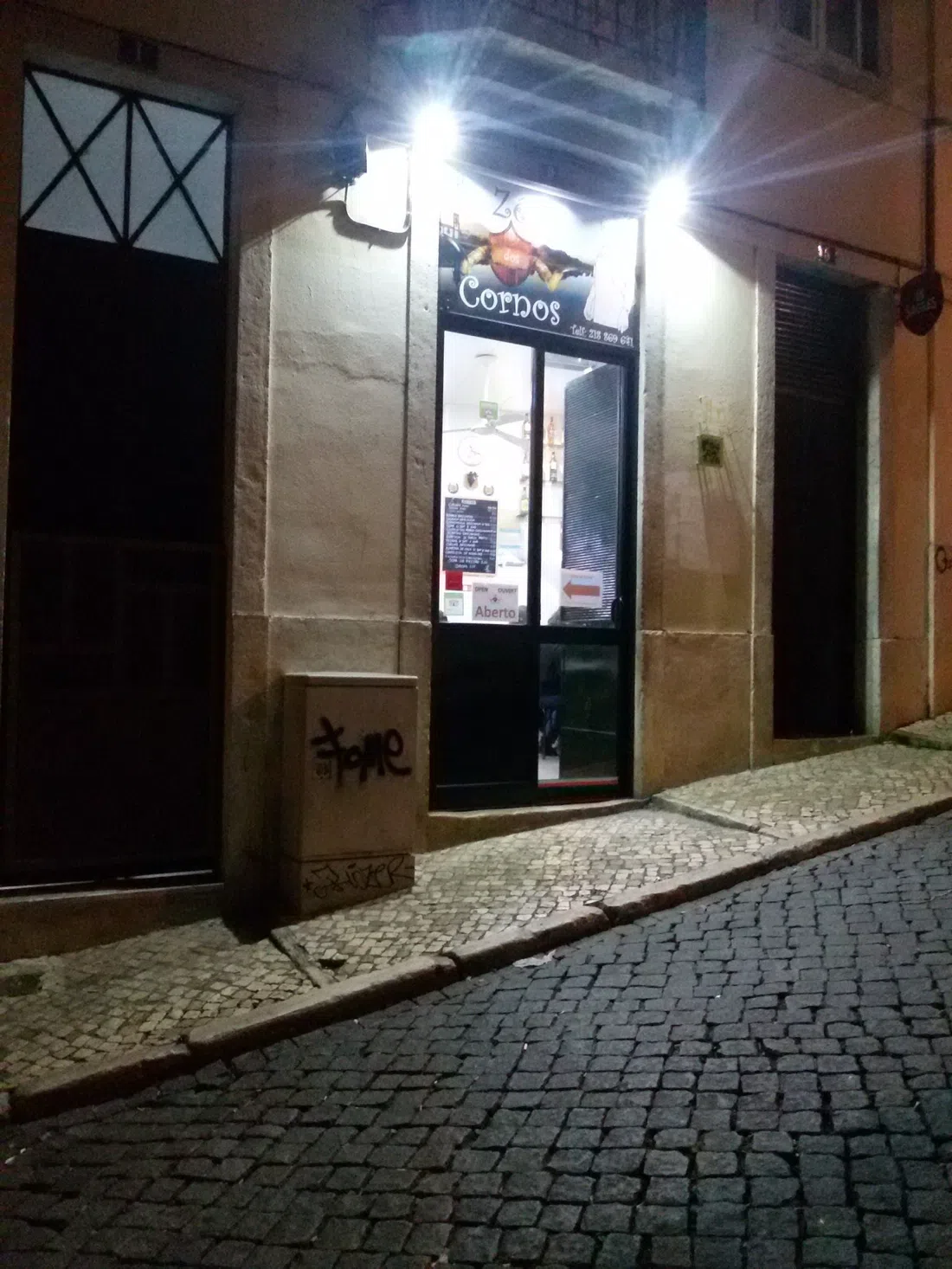
The last leg is a descent of roughly 700 m into Mouraria, much of it steps and polished cobbles, so take it slowly in wet weather and in anything other than flat shoes. Zé dos Cornos (Mouraria) is at the bottom: grilled ribs, a dish of the day written out by hand, and €10-18 a head with wine. There are no reservations, the room is tiny, and there is a near-permanent queue on the street. Two ways round it: turn up at 12:00 when the doors open, or phone ahead on +351 218 869 641 if there are six or more of you. Coming back up afterwards, take tram 28 from Graça or allow a slow fifteen minutes on foot.
The warehouse strip at Marvila and Beato
This is the one leg not to walk. Marvila is about 4 km east of Praça do Comércio along the riverfront, so take the 728 bus from Cais do Sodré or Santa Apolónia and give it twenty minutes.
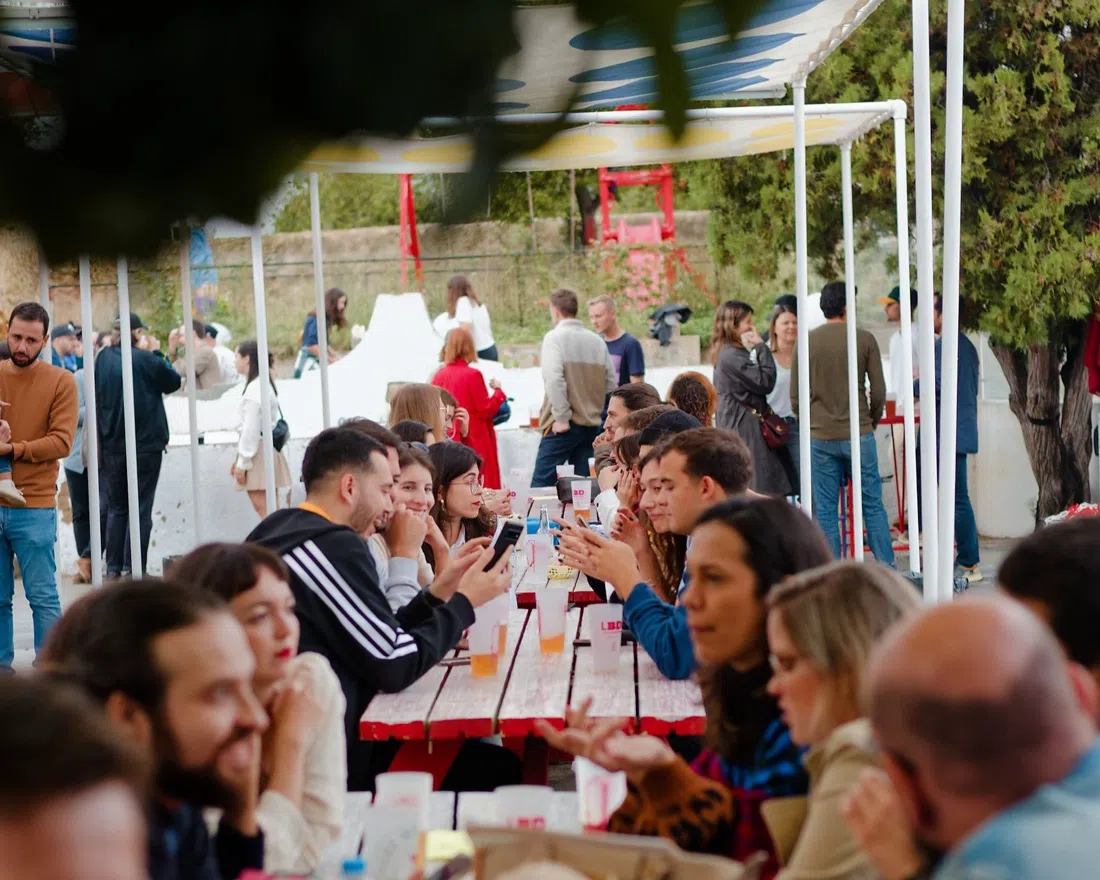
Fábrica Musa (Marvila) has anchored the brewery strip on Rua do Açúcar since 2017 and is explicitly built for groups: long benches, a big hall, live music and DJs. Beer runs €3.50-6, food €8-14. Hours are Tuesday to Thursday 17:00-24:00, Friday 17:00-03:00, Saturday 13:00-03:00, Sunday 13:00-24:00. At weekends, arrive before 20:00 if you want a bench rather than a corner of one.
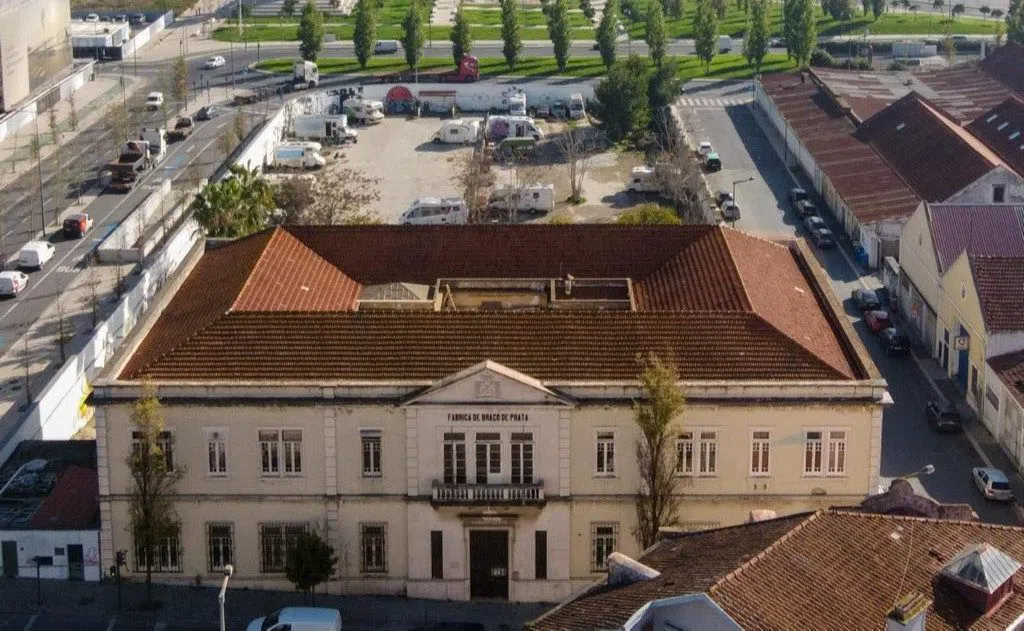
About 1.3 km further along, Fábrica Braço de Prata (Beato) is a genuine cultural house rather than a themed bar: five performance rooms, a bookshop, exhibitions, cinema and a restaurant, in an old munitions factory. It opens Wednesday to Monday from 18:00 and is closed Tuesdays. Entry is free to a few euros depending on what is on, drinks €3-6, dinner €12-20, and on the first Sunday of each month there is a Latin American fair. It is the easiest place on this list to bring a large group, because the building was designed to hold crowds and nobody will look at you oddly for arriving with ten.
Ten minutes across the river
The Transtejo Soflusa ferry (Cais do Sodré) is a working commuter crossing that happens to be the cheapest boat you will take in Lisbon. It is €1.60 with Navegante zapping, plus €0.50 for the card itself if you do not have one, and there is no booking: tap through the turnstiles and walk on with the commuters. Sailings run roughly 05:35 to 01:40, three or four an hour, and the crossing to Cacilhas takes ten minutes. Stand at the stern on the way over for the whole city in one frame.

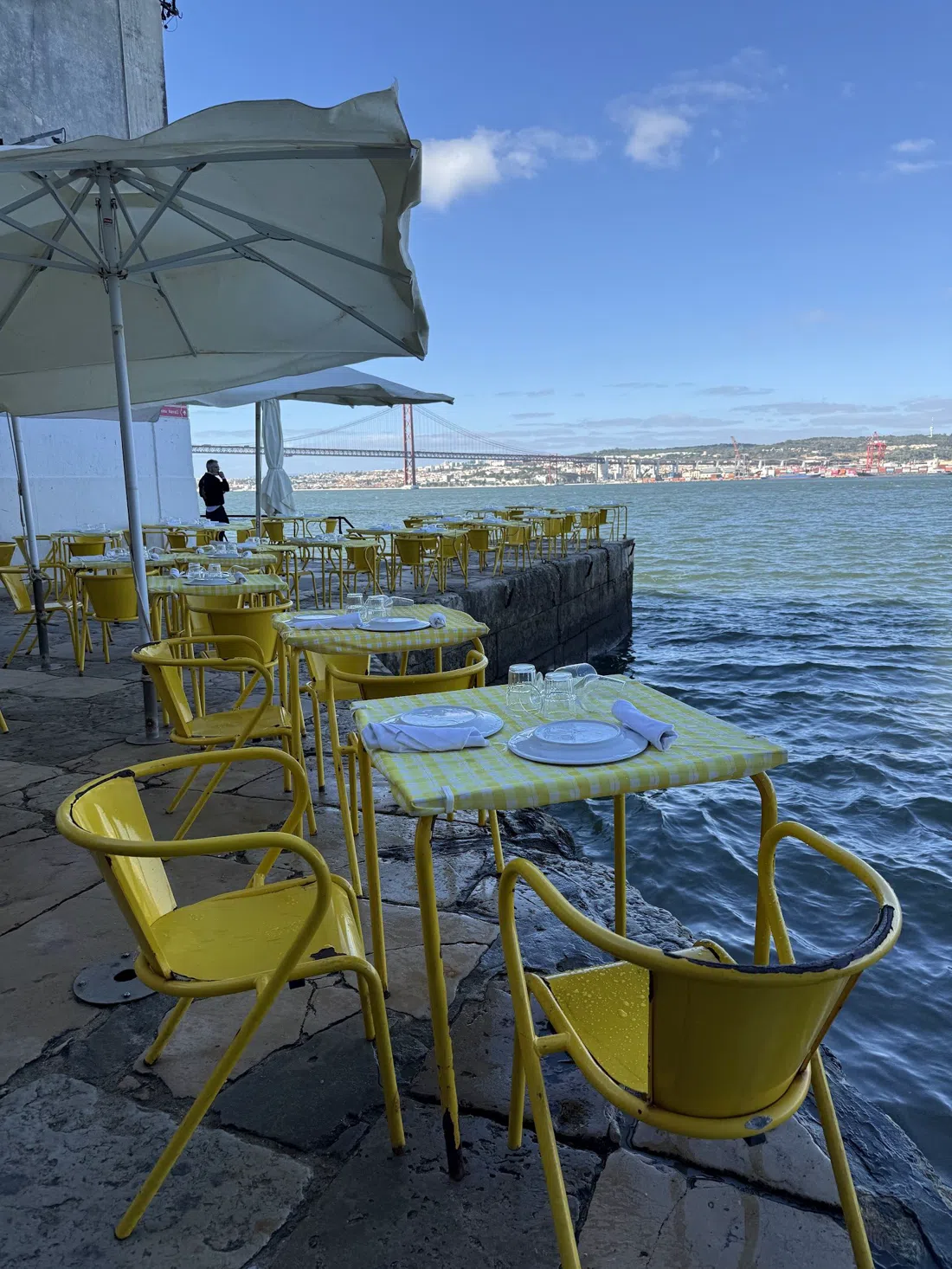
From the Cacilhas terminal, turn right along the Ginjal waterfront and walk about 1 km west. It is flat, the cobbles are uneven, several of the warehouses along it are derelict, and it is poorly lit after dark, so a phone torch on the way back is sensible. At the end of it, Ponto Final (Cacilhas) puts its tables on a narrow quay with the water at your feet and the city opposite. It is €25-40 a head, closed Tuesdays and otherwise 12:00-23:00, and it takes reservations by email at [email protected]. They recommend booking weeks ahead and they mean it. Groups are possible but the quay is tight, so keep it to six. If you have no booking, walk out for the waterfront anyway and eat back near the terminal.
Practical notes
Get a Navegante card (€0.50) and load zapping credit on it at any metro station: it covers the metro, buses, trams and the ferry, and saves you buying paper tickets at every turn. Tram 28 is genuinely useful here rather than a novelty. It links Campo de Ourique with Graça and spares you the two real climbs on this list, which are the return out of Necessidades and the haul back up from Mouraria. Everything else is either level or gentle.
Carry €20-30 in small notes. Cards are widely taken now, but flea-market stalls, market produce counters and the smallest pastelarias all move faster with cash, and the queue behind you will notice.
Timing decides most of this. Feira da Ladra is Tuesday and Saturday only; Mercado de Alvalade Norte is mornings only and finished by early afternoon; Damas is closed Mondays; Fábrica Braço de Prata and Ponto Final are both closed Tuesdays; Fábrica Musa does not open until 17:00 midweek; Estufa Fria is closed Sundays. Build the day around whichever of those constraints bites first.
Budget €25-40 a head for a full day of it: market lunch, two coffees, a park ticket, a gig at Damas or Village Underground. Make it €60-80 if dinner is on the quay at Ponto Final. If you are still choosing where to stay, Campo de Ourique and Graça each put you inside one of these walks before breakfast; a Lisbon hotel search will show you what is available in both.