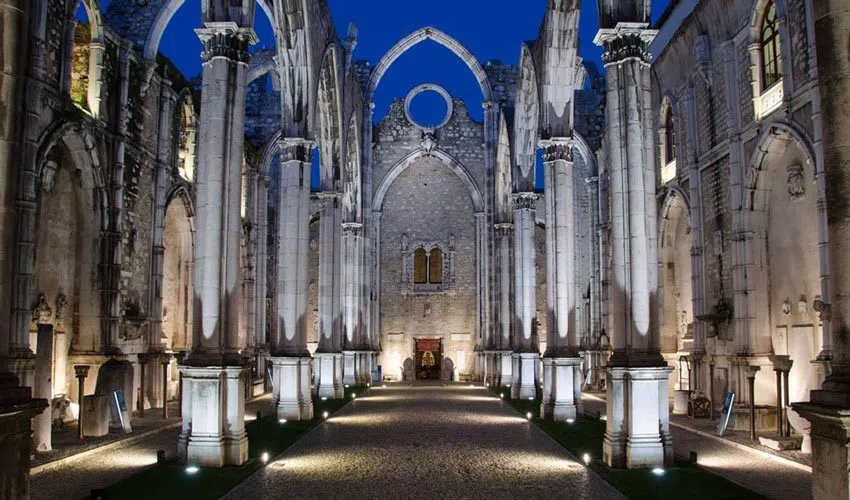

You pay at a desk on Largo do Carmo, step through the doorway, and the roof is gone. Pointed arches march away from you in two rows carrying nothing at all, pigeons cut across the space where a vault used to be, and in September the sun comes in at an angle that leaves half the floor bleached and the other half cold. The earthquake brought the ceiling down on 1 November 1755 and nobody ever put it back. The gap is what you have come to look at.
What you actually walk into
Museu Arqueológico do Carmo (Convento do Carmo) (Chiado, at the top of Largo do Carmo) is a ruined Carmelite church with a small museum living inside it, and the ruin is the reason to come. The church went up at the end of the 1300s and was one of the larger Gothic buildings in the city until the earthquake struck during All Saints' Day mass and left it a shell. Nineteenth-century Lisbon decided not to rebuild. It kept the shell, put an archaeological collection in the roofed end, and the arrangement has held ever since.
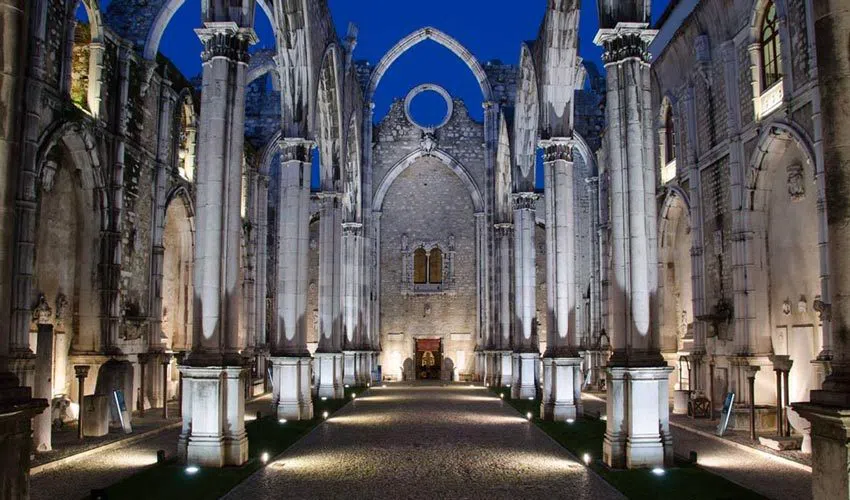
So the visit has two halves that feel nothing alike. The nave is open air: bare arcade, worn paving, weeds where weeds want to be, sky sitting exactly where a ceiling should be. You will spend most of your time here, and most of it looking up. Then you walk into the old apse chapels, which still have roofs, and it becomes a quiet, slightly old-fashioned museum: carved tombs, Roman and medieval stonework, inscriptions, tile panels, cases of fragments gathered over a century and a half of collecting. The labelling is sparse by modern standards. If you need screens and interpretation to hold your attention, this half will not do it for you; if you like reading a stone, it will.
Most people take 45 minutes to an hour for both halves. If you only want the nave, and plenty of visitors reasonably only want the nave, twenty minutes covers it honestly.
The square outside is half the visit
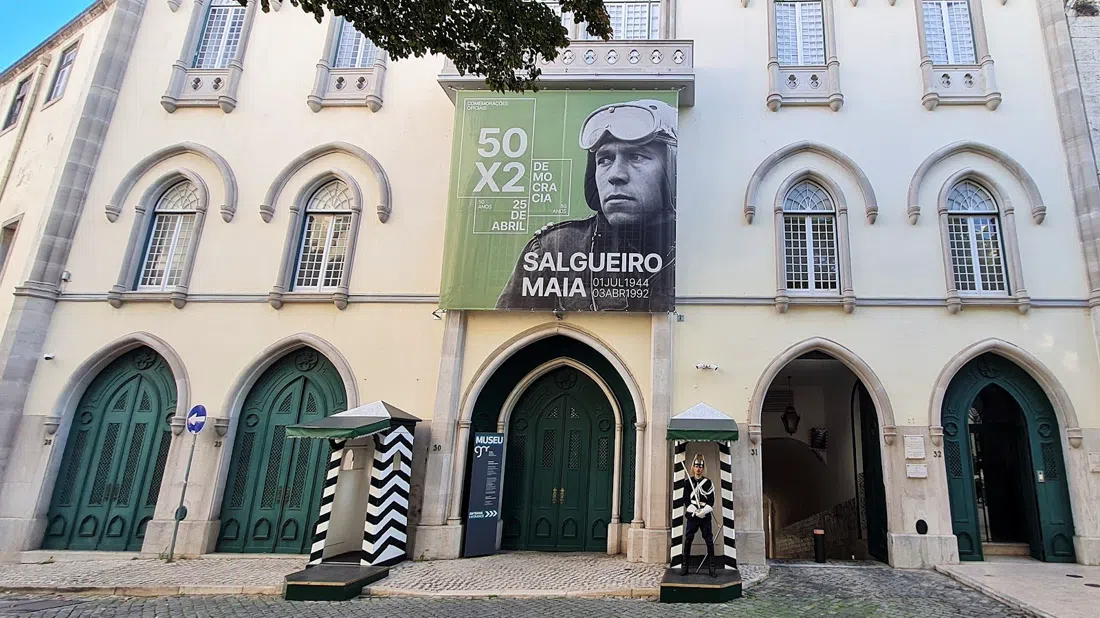
Don't treat Largo do Carmo as a forecourt. Directly opposite the convent is Museu da Guarda Nacional Republicana (Quartel do Carmo) (Chiado, the barracks side of the square), the building where Marcelo Caetano surrendered on 25 April 1974 and the dictatorship ended. It is open Monday to Saturday 10:00 to 18:00 with last entry at 17:30, entry is free or nominal, and there is a bag check and X-ray at the door. The catch is the format: proper visits are guided, for groups of 10 to 25, weekdays at 10:30 and 14:30, booked in advance by email. Two of you turning up on spec will not get the tour. You can still stand in the square with the façade in front of you, and knowing what happened there changes the ten minutes you spend on the cobbles.
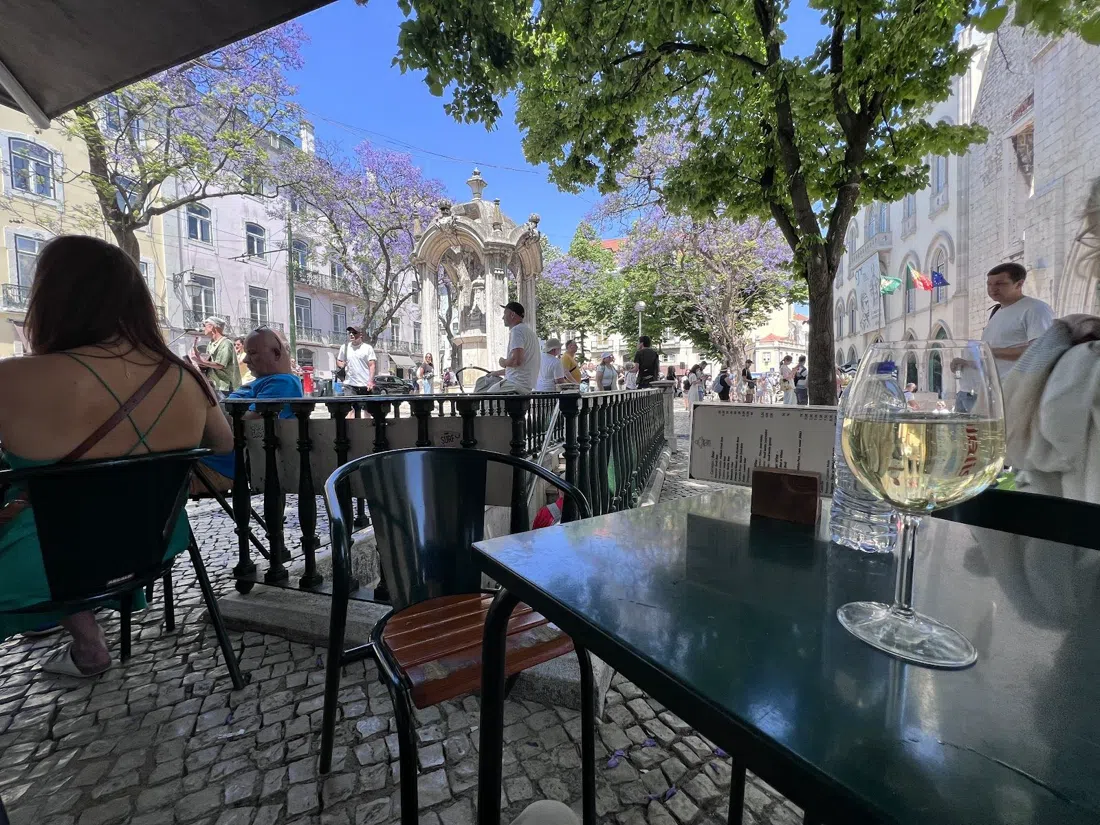
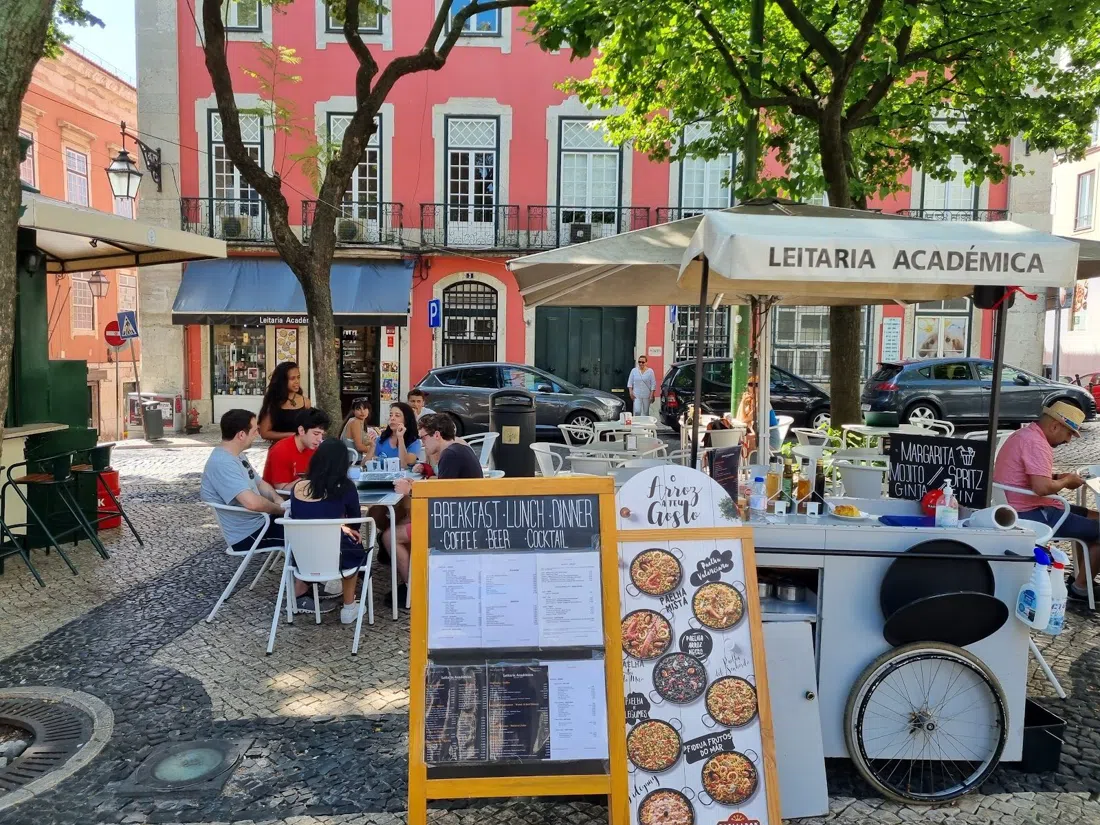
For waiting, sitting or regrouping, Leitaria Académica (Chiado, the esplanade facing the convent door) has the outdoor tables everyone wants: coffee €1 to €2, plates roughly €10 to €15, open Monday to Saturday 07:00 to midnight and Sunday 07:00 to 20:00. It absorbs a group but fills fast at lunch. Cheaper and more informal, Quiosque do Carmo (Chiado, in the square itself) is a kiosk bar with a beer or a coffee for a few euros, open daily from 11:00 until late, useful precisely because it is still serving after the museum locks up.
Going up now that the Santa Justa Lift is shut
The Santa Justa Lift and its top-level miradouro are closed with no reopening date announced, which removes the usual way people get up to rooftop level here. The replacement is Terraços do Carmo (Chiado, the terrace level beside the convent), a free public space with no door policy at all. You reach it on foot from Largo do Carmo, or from Rua Garrett via the Siza walkway and the public lift in the Leonel building. Same rooftop-level view over the Baixa rooftops and the castle hill, no fare, no queue. It narrows in places, so a group of eight should spread out rather than clot at the railing.
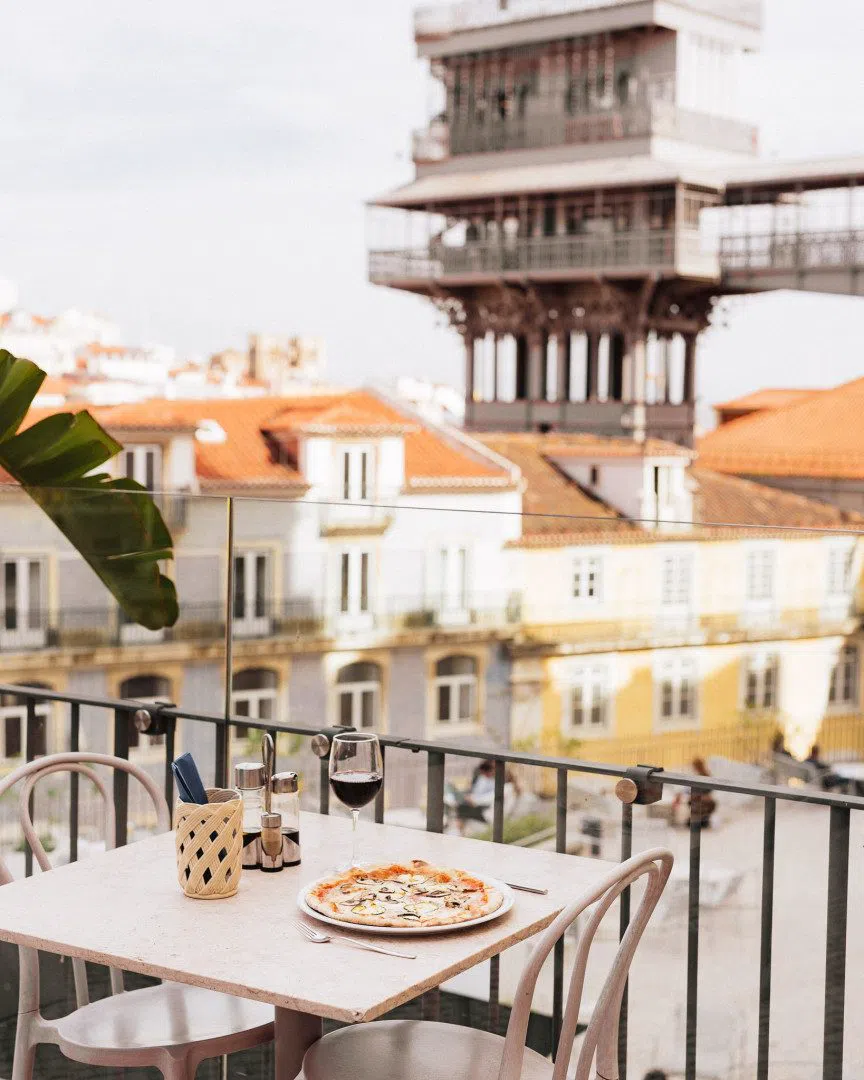
On that same terrace sits Carmo Rooftop (Chiado, on the Terraços do Carmo level), which used to trade as TOPO Chiado. Search the old name and you will find dead listings. Cocktails run roughly €12 to €16 with small plates and light meals, and you drink with the convent wall at your shoulder. It is at its fullest at sunset; anything over four people needs a reservation.
Picking your hour and your day
Through September the museum runs Monday to Saturday, 10:00 to 19:00, last entry twenty minutes before close. It is closed on Sundays. That closure catches people out more than anything else about this place, so if your plan lands on a Sunday, check the day before and move it.
Two windows are worth aiming for. The first is 10:00, at opening: the sun is low, the arcade throws long shadows across the nave, and the floor is nearly empty. The second is after 17:00, when the guided groups have moved on and the September light comes warm and side-on through the arches. That is the hour the ruin looks least like a monument and most like a building something happened to. Midday is the one to skip. There is no shade in the nave, the square outside is at its busiest, and the stone throws heat back at you.
By day of the week, Saturday is the heaviest and Monday to Thursday the lightest. Late morning on any day is when the walking routes converge on Largo do Carmo.
Tickets at the door and when booking ahead earns its money
Entry is €7 for adults and €5 for students, over-65s and Lisboa Card holders. Under-14s and reduced-mobility visitors go free. Parties of 30 or more pay €5 a head, and guided visits can be booked in advance directly with the museum. The desk takes cash, card and MB Way.
The queue, when there is one, is a ticket-desk queue rather than a monument queue, a handful of people deep at its worst, usually between 11:00 and 13:00. You do not need to pre-book to get in.
Booking ahead buys you one of two things. Either a guided reading of the ruin arranged direct with the museum, which is worth it if you want the architecture explained rather than guessed at, or a wider walking route through the quarter with the convent as one stop. Guided options do exist, they start from around 85 USD per person, and they run seven days a week, which matters here because the museum does not. A Sunday departure cannot take you inside this building. Before you pay for any guided product, check whether the €7 admission is included or whether you will be paying it again at the desk.
What the ruin asks of you
This is a 14th-century ruin, not a refurbished gallery. The ground is uneven, there is old paving and gravel and a few thresholds, and the route is not step-free throughout even though reduced-mobility entry is free, so ask at the desk about the parts you can reach before you commit. The nave has no shade whatsoever, so in September take a hat, sunglasses and water; the 14:00 sun still has real weight in this month. If it rains, the nave gets rained on and there is no cover in it at all; the roofed aisles and chapels are your shelter, and the visit shrinks to twenty minutes. Voices carry hard under the arches and the chapels are genuinely quiet, so keep it down in there.
Is it worth the €7
Yes, and it is one of the few places in the city where that is an easy answer. It is cheap, it takes an hour, and it says more plainly than any museum display what 1755 did to Lisbon, because you are standing in the damage. The collection inside is modest and old-school. Buy the ticket for the roofless nave and treat the museum as a bonus, and you will not feel short-changed.
It suits couples, solo travellers, anyone with a spare half-day in the Lisbon guide itinerary, and readers who like architecture and history without a soundtrack. Families do well: under-14s are free and children generally react to a ceiling-less church faster than adults do. Groups fit less comfortably, because there is nowhere much to sit inside, the aisles are narrow, and thirty people move slowly through the chapels even at the €5 rate. The guided tours operating around this square have accumulated 5,165 traveller reviews between them, which tells you plainly that Largo do Carmo is well-trodden ground; the museum itself still empties out by 18:00.
Why September is a reasonable month for this
The open nave is a liability in a downpour and a pleasure in dry warmth, so the month you visit matters more here than at a normal museum. September mostly delivers the second. The heat is off its August peak but daytime temperatures still sit comfortably in the mid-twenties, and the rain generally holds off until the last week or two of the month. Sunset slides from a little after 20:00 at the start of September to around 19:15 by the end, which means through most of the month you can do a 17:00 visit, walk out at closing, and still have daylight for a viewpoint.
The crowd thins from the first week onward as the summer peak drains away. And with the Santa Justa Lift shut and the Glória funicular out of action, everything in this quarter is now done on foot. September is the month when walking Lisbon's hills stops being punishing.
The rain plan and the Sunday problem
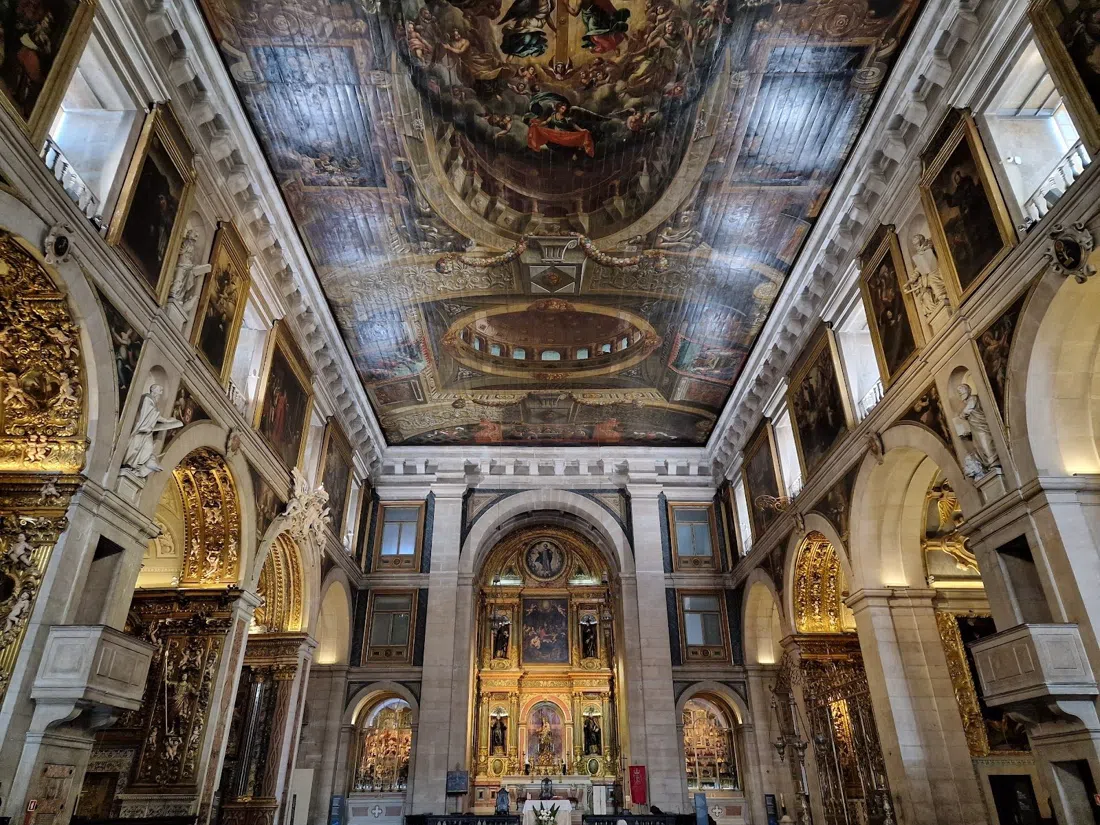
Both problems have the same solution. Igreja e Museu de São Roque (Bairro Alto, Largo Trindade Coelho, six or seven minutes from the square) is fully roofed and opens on Sundays, when Carmo does not: Tuesday to Sunday 10:00 to 18:00, Monday 13:00 to 18:00, last entry half an hour before. The church is free, the museum is €2.50 with 40% off for Lisboa Card holders and free on Sunday mornings until 14:00. Pair it with Carmo and you have the ruined church and the intact, heavily gilded one within a ten-minute walk of each other.
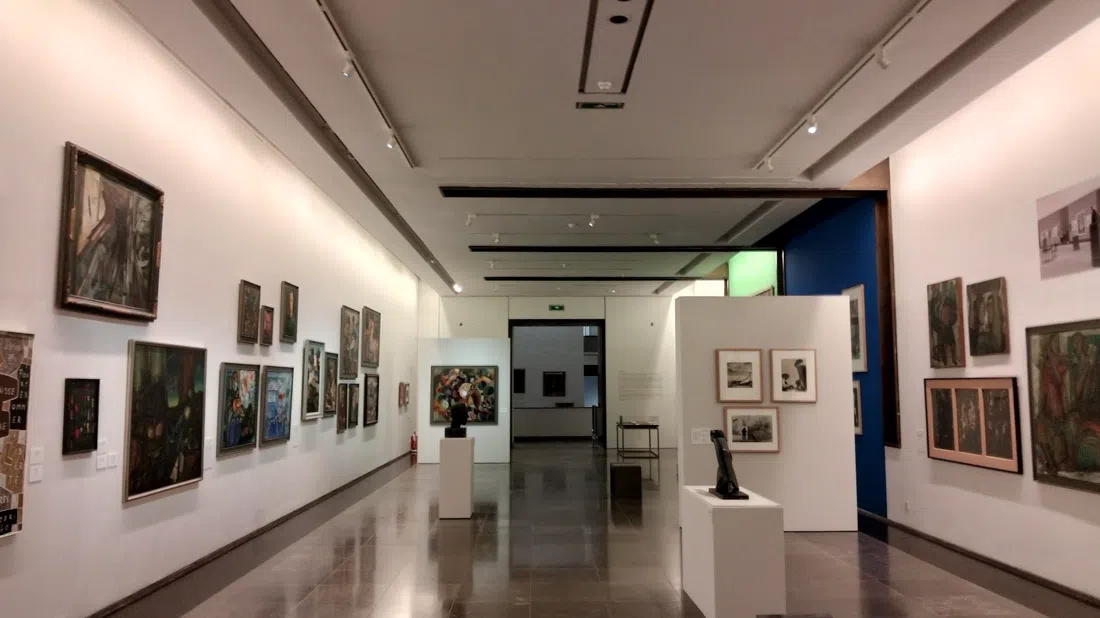
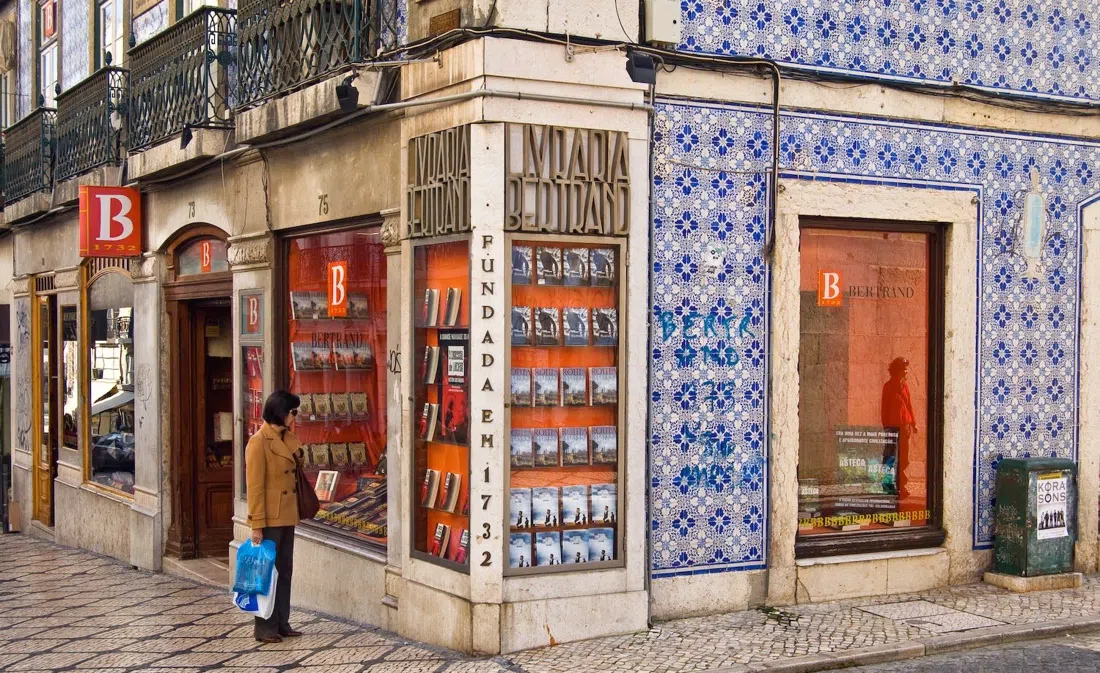
MNAC — Museu Nacional de Arte Contemporânea do Chiado (Chiado, a few minutes downhill) is €8, free with the Lisboa Card and closed on Mondays. One warning: it is open but running renovation works under Portugal's PRR programme, and some areas are temporarily closed to the public, so check which galleries are accessible before you build an afternoon around it. Livraria Bertrand Chiado (Chiado, Rua Garrett, three minutes away) is the better wet-weather fallback, trading since 1732 and Guinness-recognised as the oldest operating bookshop still in business. The rooms are narrow, so a group should filter through in twos and threes. Monday to Saturday 09:00 to 22:00, shorter on Sundays, worth checking on the day.
Eating and drinking within a few hundred metres
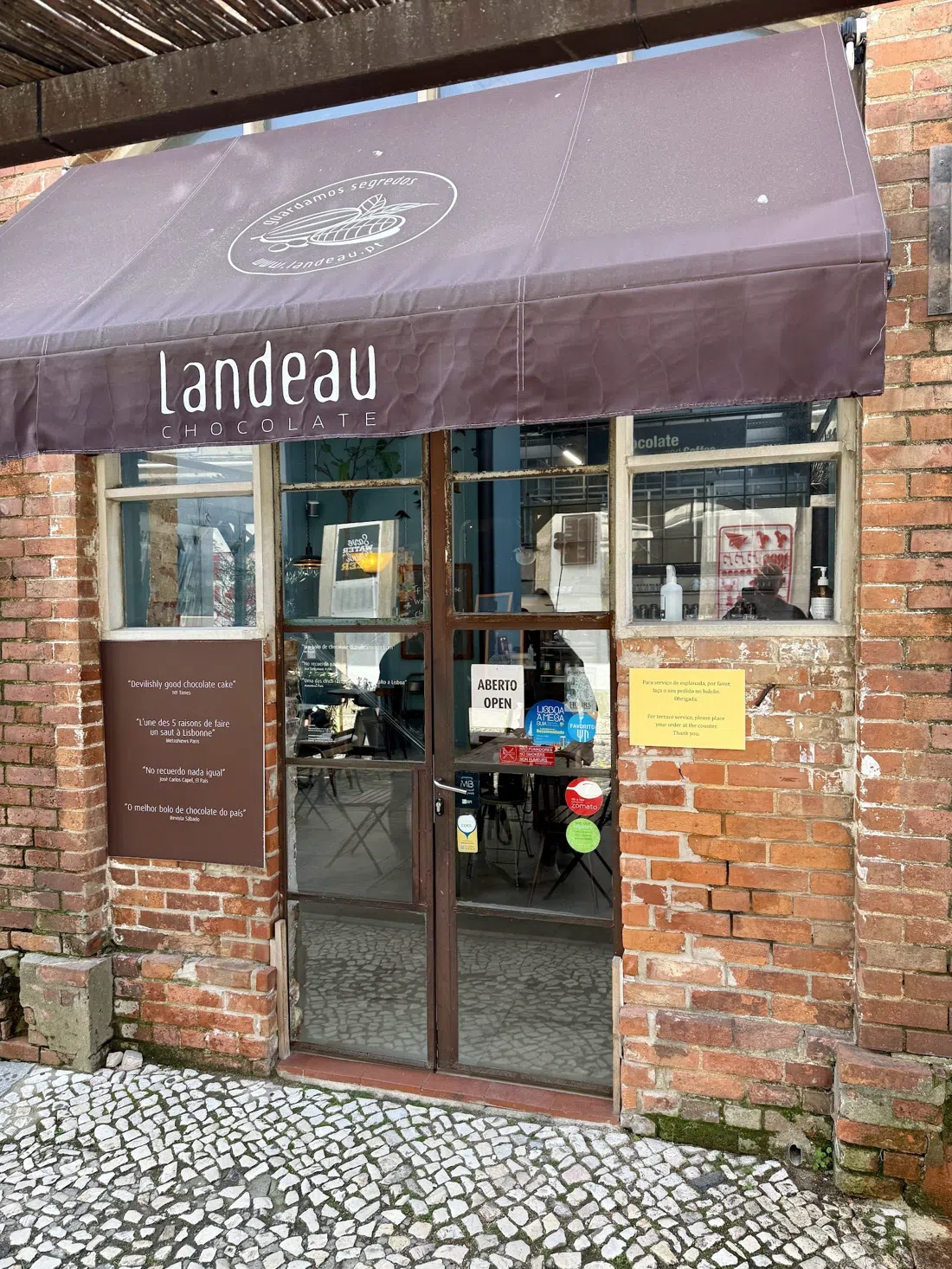
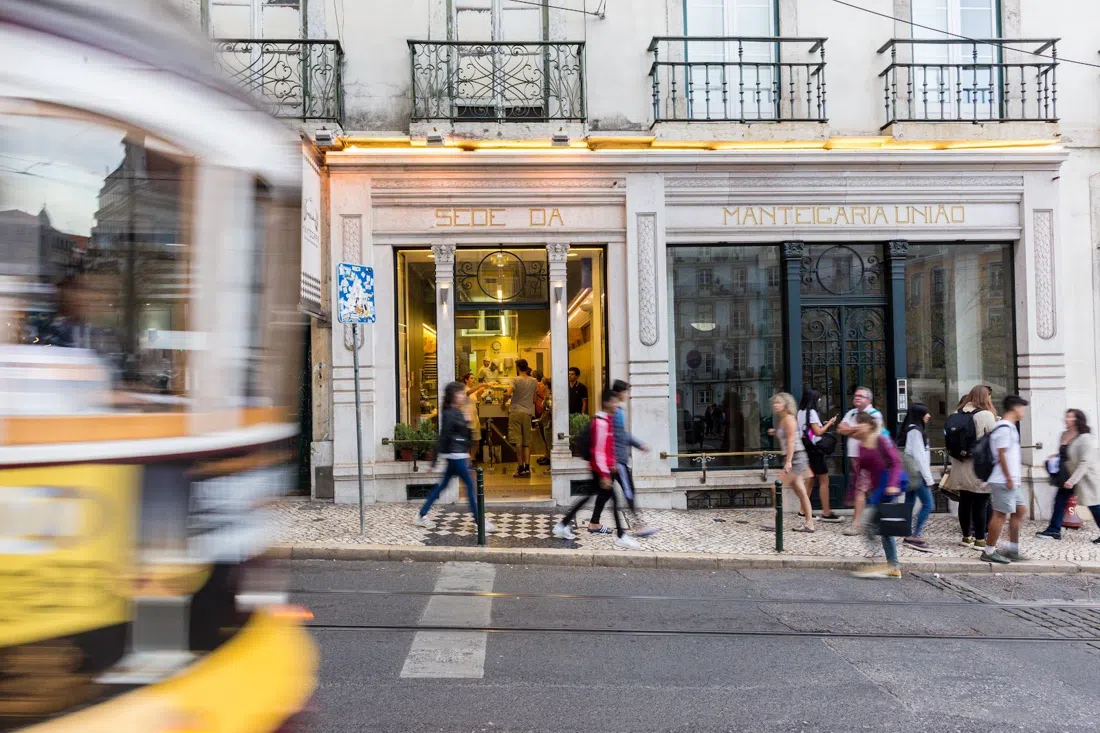
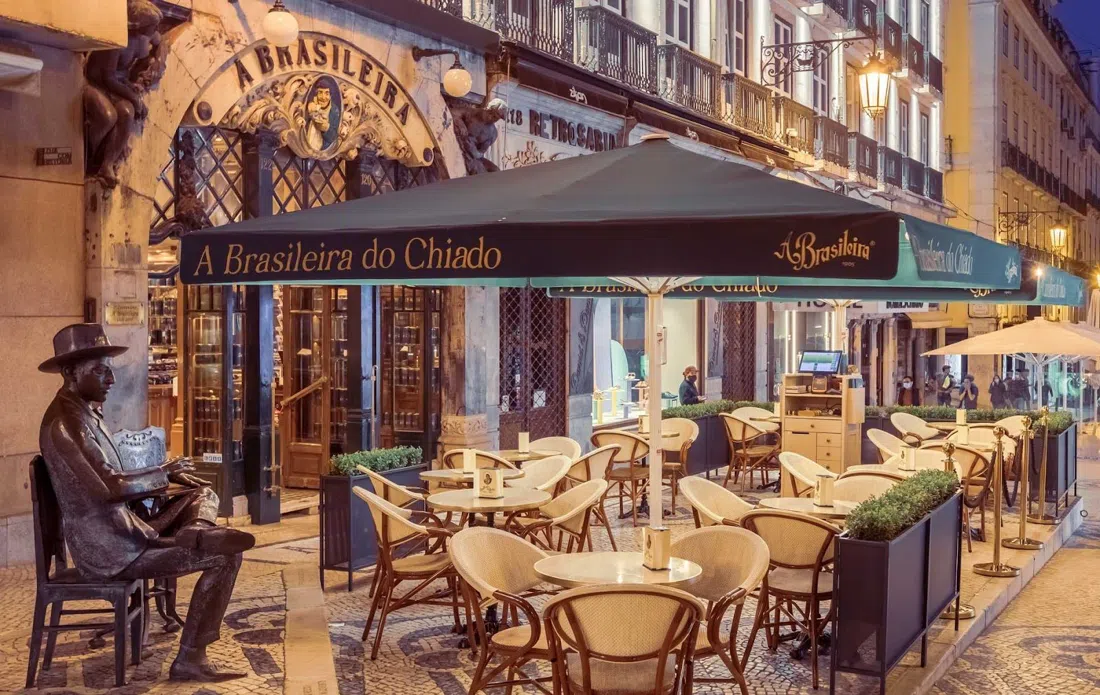
Manteigaria — Chiado (Chiado, standing room only) does a pastel de nata for about €1.50 and stays open to midnight, long after the museum shuts. There is nowhere to sit; you eat it on your feet, and the queue spills onto the pavement. Café A Brasileira (Chiado, Rua Garrett) has been open since 1905 and is unmistakably touristy, but it is the landmark on the walk down: an espresso is about €1 standing at the counter and several times that at a terrace table, so stand. Some of its 1971 artworks are away for restoration and due back during 2026. Landeau Chocolate — Chiado (Chiado, a short downhill detour) sells essentially one thing, a single-recipe chocolate cake, roughly €5 a slice with coffee, daily from around midday to 19:00. It is an afternoon stop, not an evening one, and the room is too small for more than about six of you.
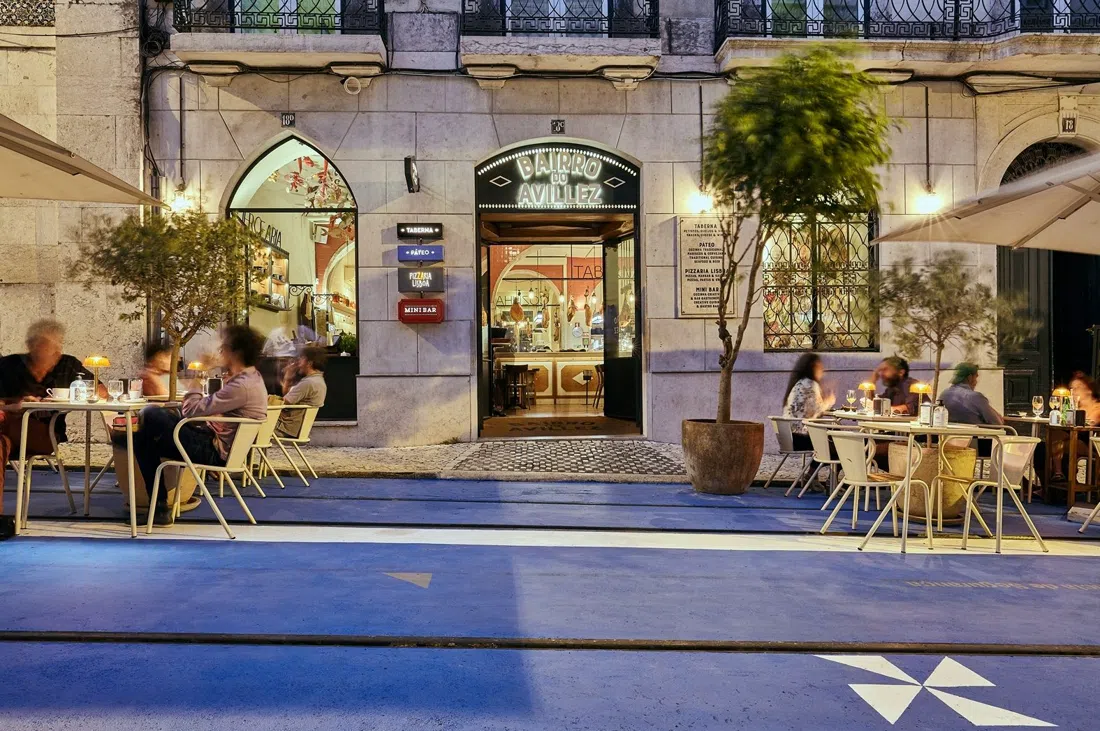
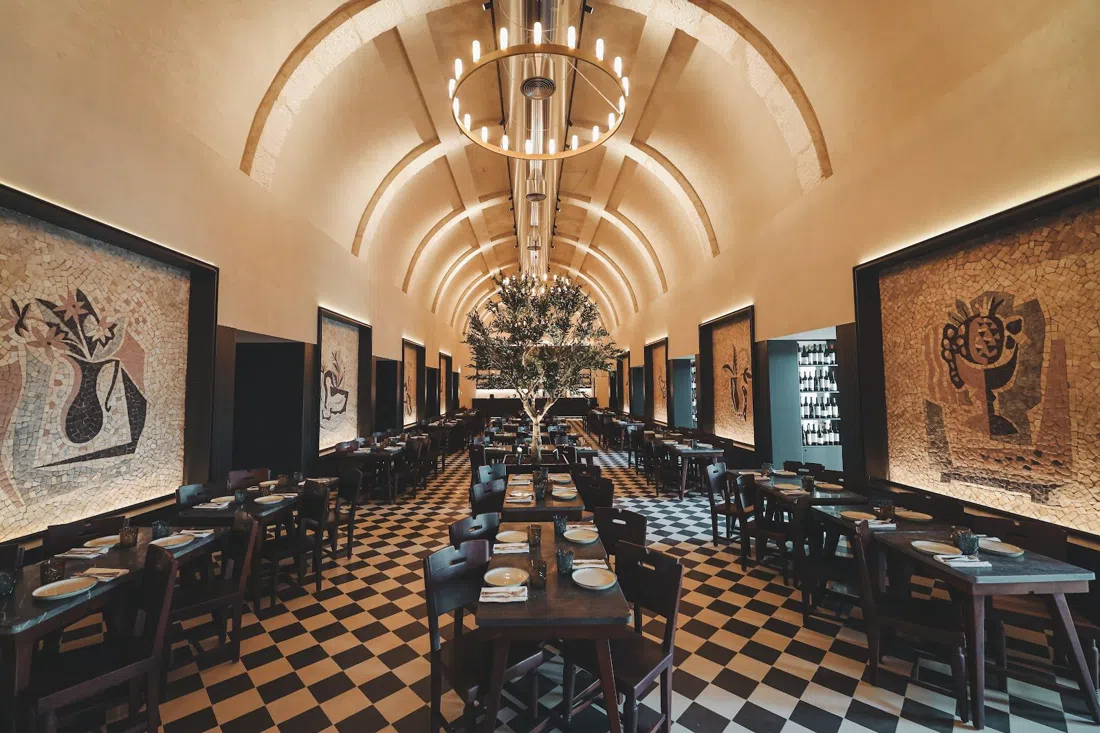
For a proper sit-down meal, Cervejaria Trindade (Chiado, Rua Nova da Trindade, two minutes downhill) is a former convent turned tiled beer hall, mains roughly €15 to €25, Sunday to Thursday noon to midnight and to 01:00 on Friday and Saturday. It is explicitly built for large tables, reservations are advised, and it runs short tours of the tiled room between 10:00 and 12:00 and 15:00 and 19:00. The hall is more of a draw than the menu. Bairro do Avillez (Chiado, Rua Nova da Trindade, 200 m from the convent) is one operator running four rooms (Taberna, Páteo, Mini Bar and Pizzaria Lisboa), with petiscos from around €8 and mains from €20. Book for dinner, weekends and fado nights.
Ending the day uphill
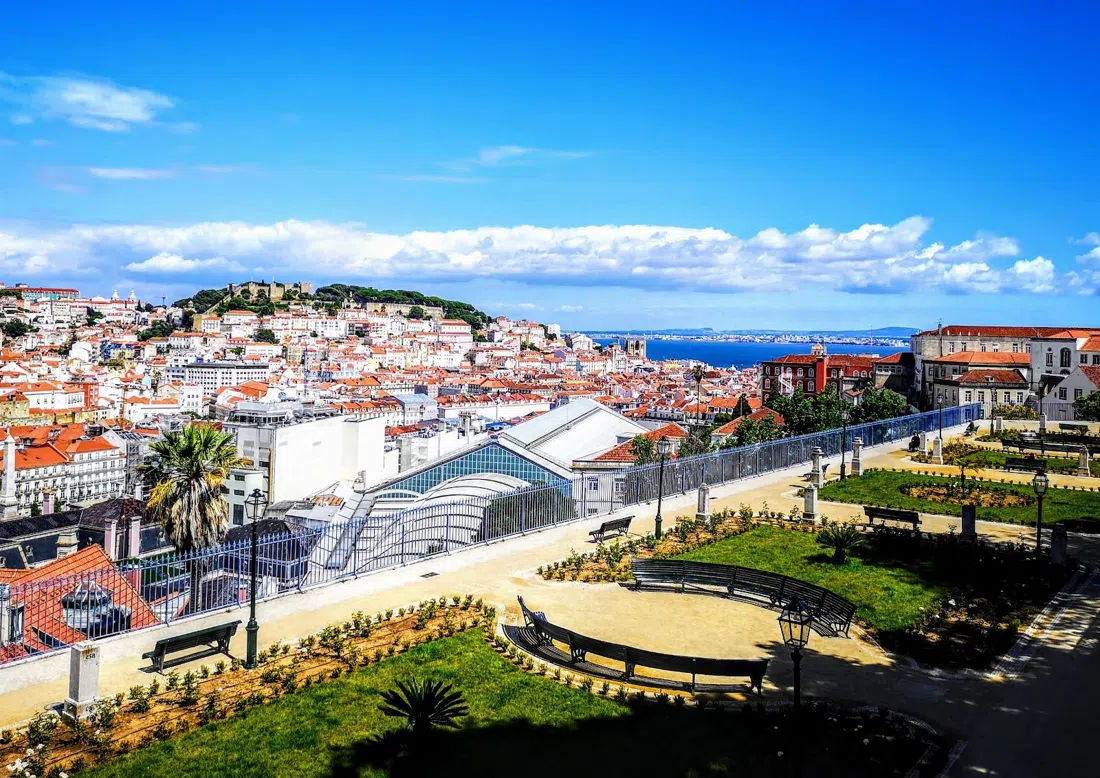
If you want the evening view, walk ten minutes uphill to Miradouro de São Pedro de Alcântara (Bairro Alto, above Rua da Misericórdia). It is a free public garden, open to any size of group, and it gives you the whole city stacked up towards the castle. The Glória funicular that normally carries people up to it is out of action, so budget for a genuine climb, steep for the last stretch, and do it before sunset rather than sprinting it. The kiosk bar runs Sunday to Thursday 10:00 to 21:00 and Friday and Saturday to 02:00, drinks a few euros.
Practical notes
Getting there is a metro ride to Baixa-Chiado (green and blue lines), then the Largo do Chiado exit and about 300 m on foot, mostly gentle, with one short climb at the end. Tram 28 stops a couple of minutes away in Chiado. Coming up from the Baixa grid on Rua do Carmo is a steady uphill on smooth paving that gets slippery when wet, and neither the Santa Justa Lift nor the Glória funicular is currently an option, so plan every approach on foot.
On money, the museum desk takes cash, card and MB Way. Kiosks and the smaller pastry counters prefer small notes and coins, so keep a few euros on you.
For timing, ninety minutes covers the convent and a coffee in the square. Half a day covers the convent, the terrace, São Roque and the walk down through Chiado. If you only have one morning, go at 10:00.
A modest day here runs about €7 for the museum, €2.50 for the São Roque museum, €1.50 for a pastel de nata and a couple of euros at the kiosk, so under €15 a head before lunch. Add a rooftop cocktail at €12 to €16 and dinner at €20 and up, and you are at a normal Lisbon evening. For a base within walking distance of all of it, start with the Lisbon hotel search and look at Chiado and Bairro Alto, but take the noise seriously if you are a light sleeper, because the bars up the hill run late.