The Lisbon issue
Slow Lisbon Days, Seafood Lunches and Easy October Escapes
How I spend October in Lisbon: long shellfish lunches, two museums for the wet afternoons, and three train rides out that beat any packed itinerary.

By Nádia FontesTwo visits before I say a word about the food
October is when Lisbon hands the city back. Afternoons still reach 21 or 22 degrees, the light goes long and yellow by four, and the queues that made September unbearable have thinned to something you can walk past. I plan the month one long lunch at a time: a hill in the morning, shellfish at two, a train out of town on the days the rain sets in.
Two hours at the shellfish table
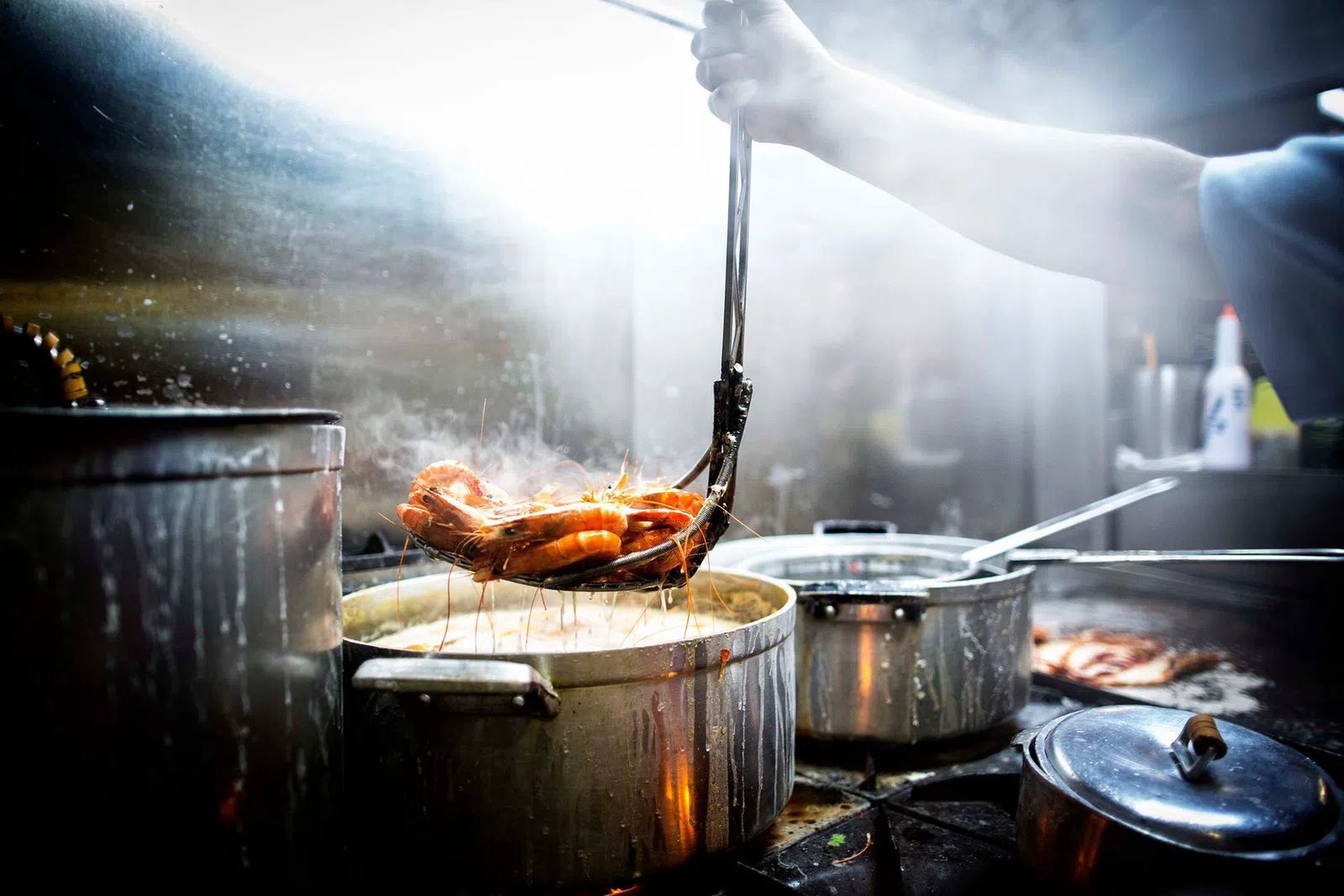
Garlic prawns and a cold beer at Cervejaria Ramiro (Anjos, at the top end of Avenida Almirante Reis) come to €35-60 a head once the shellfish has been weighed, and I have never got out of there in under two hours. That is the point of it. My order barely changes: prawns swimming in garlic butter, then whatever crustacean looks best on the ice, then, and this matters, the steak sandwich last, as dessert, the way the room does it. Shellfish is priced by weight, so ask what the crab or the percebes cost before you nod at them.
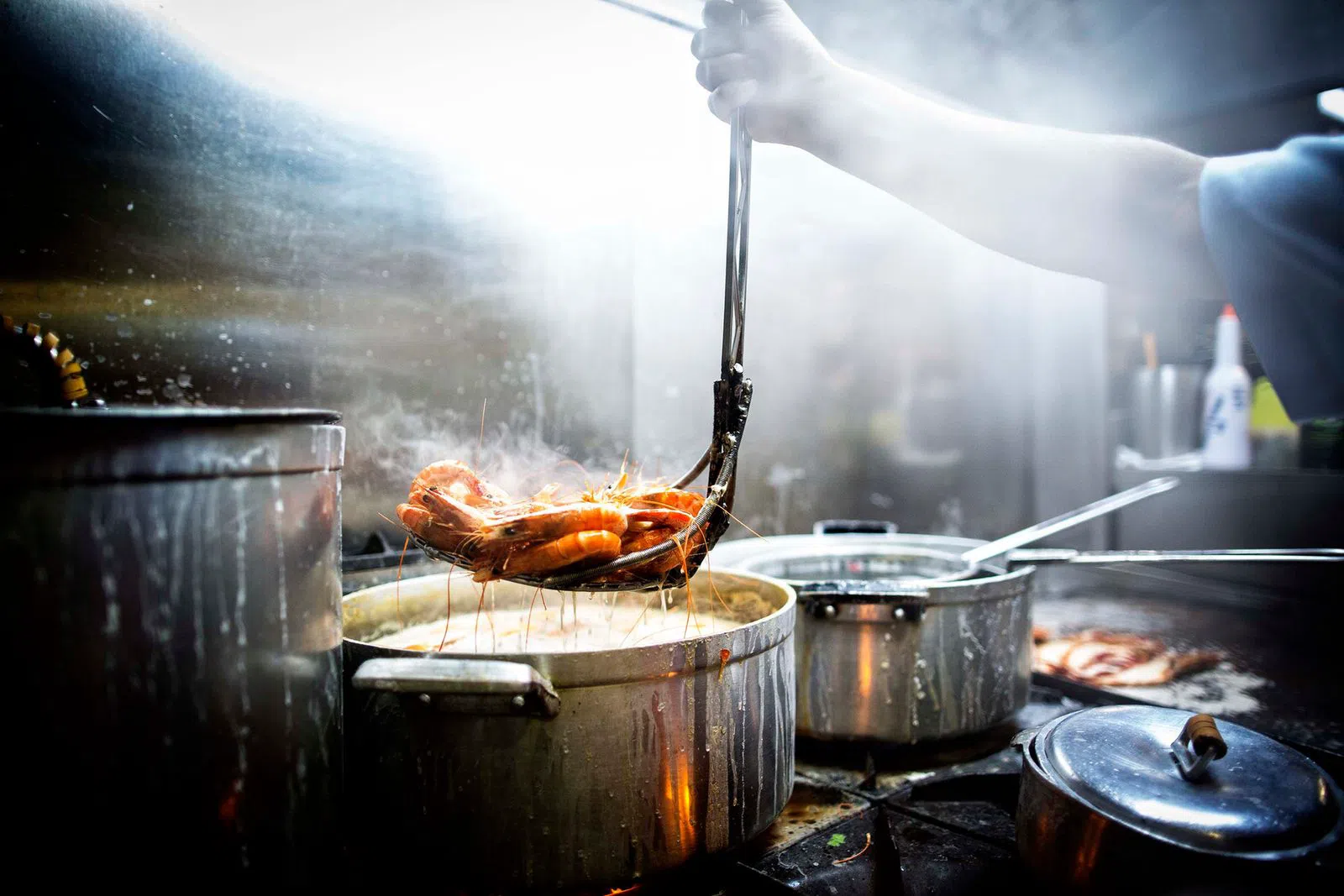
Book online for an early sitting. You pay a €25 per head deposit and it comes straight off the bill, which is the fairest deposit in the city. There are no reservations after 19:30, so an eight o'clock arrival means standing on the pavement with everyone else, and in October that pavement has a wind coming down the avenue. Parties over six can't use the website at all, so email [email protected]. Closed Mondays. It takes groups happily, because the noise swallows them; it is a poor choice for a quiet conversation.
Plan your Lisbon trip
Live prices from our booking partners.
Free cancellation on many rooms. We may earn a commission when you book.
The sardine nigiri I keep going back for
Grilled sardine nigiri at Sea Me – Peixaria Moderna (Chiado, on Rua do Loreto) is the dish I've now ordered on two separate visits inside the same month, which is my own test for whether a place is real. Dinner lands at €40-60. The room sits exactly between a traditional marisqueira and a sushi counter, a fish display at one end and a rice counter at the other, and after fifteen-plus years it still gets the balance right rather than turning into a novelty.

It's open daily and reservations are advised; the good dinner slots go days ahead, particularly Thursday to Saturday. The Rua do Loreto address is the practical reason I book it for mixed parties: everyone can walk there from wherever they're staying, and it takes medium groups without the table feeling like a canteen. Couples do fine at the counter.
A table that absorbs ten people
Arroz de lavagante, lobster rice ladled into the middle of the table, at Solar dos Presuntos (Restauradores, on Rua das Portas de Santo Antão) is €45-70 a head, and the octopus alongside it feeds four people who claimed they weren't hungry. Minho cooking meeting Atlantic shellfish, running since 1974, and I've eaten here twice this year with groups of different sizes.

This is the one I book when there are ten of us. It publishes set group menus for 2025 and 2026, and the several floors mean a big party gets a room rather than a long awkward line of chairs down the middle of a small dining room. Reserve well ahead, especially for dinner. Yes, it's an institution and the staff are used to visitors, but the cooking has not slid because of it.
Staying in Belém for lunch instead of leaving
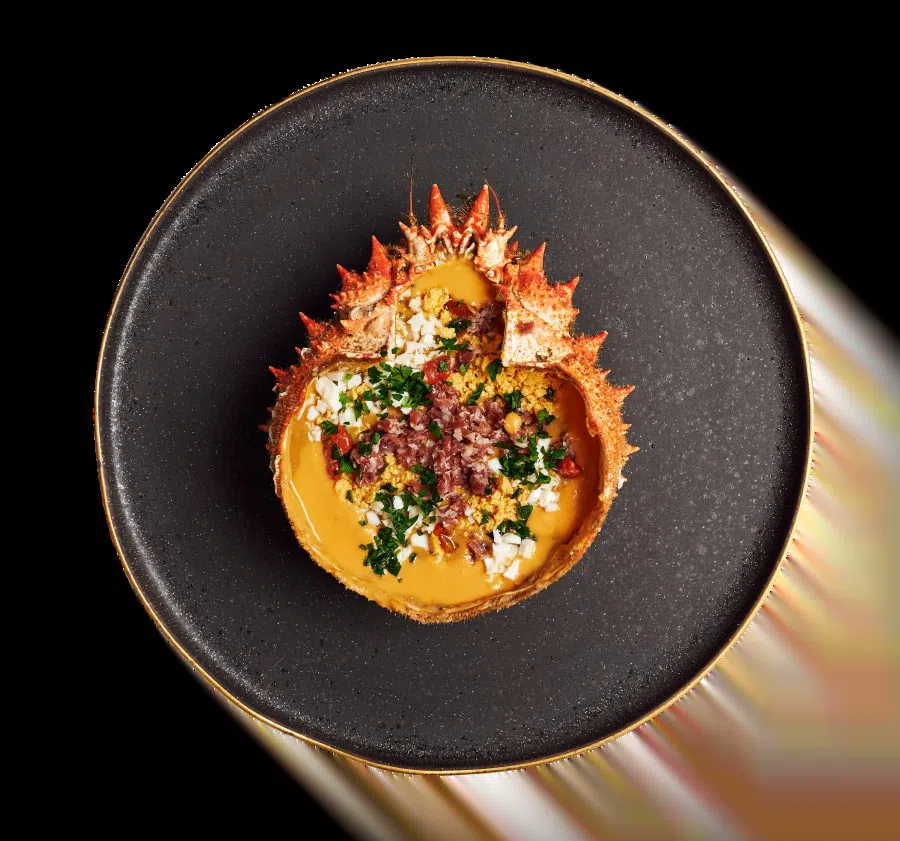
Arroz de lavagante again, and a spider-crab salmorejo, at Nunes Real Marisqueira (Belém) for €45-70 a head. I've been twice, both times after a morning at the monastery, and it's the only reason I now treat Belém as a full day rather than a pastel de nata and a bus back into town.
The premises were enlarged in 2022, so groups are genuinely welcome. Book ahead if there are six or more of you. Open Tuesday to Sunday, closed Mondays. If you're doing Belém in October, go in the morning while the light is on the river, then sit down here at one and let the afternoon disappear. That is the whole plan; you don't need another one.
An evening in Campo de Ourique where nobody is queueing
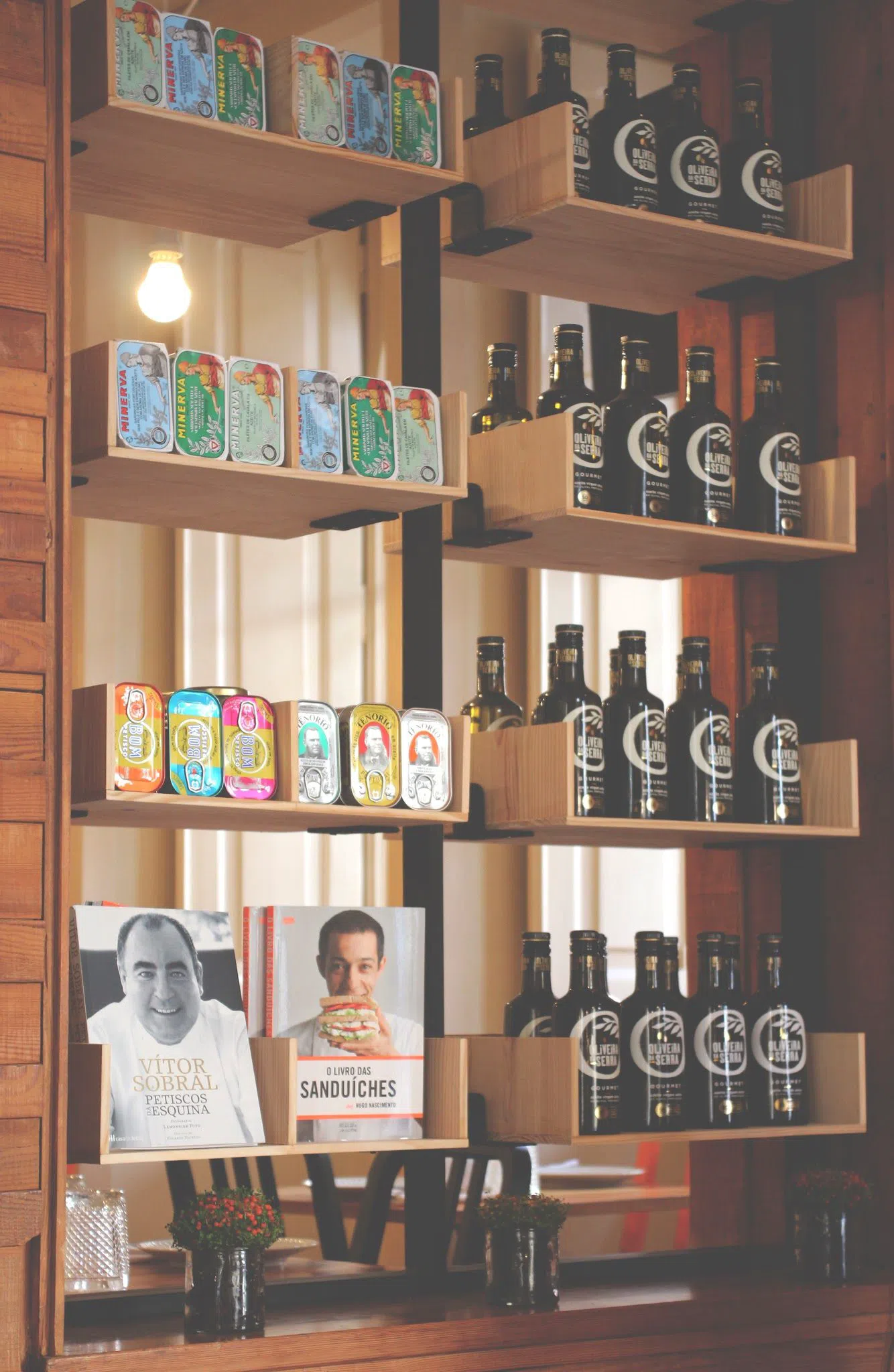
Cured, marinated and grilled fish in tapas-sized plates at Peixaria da Esquina (Campo de Ourique) runs €35-50 a head. This is Vítor Sobral's fish room, dropped into a residential grid where there is no queue, no clipboard and no one filming their food. Two visits in and I'd send a couple here over anywhere in the centre for a slow evening. It takes small to medium groups by reservation only. It is a corner site in a residential block and it is not built for a party of twelve, so don't try.
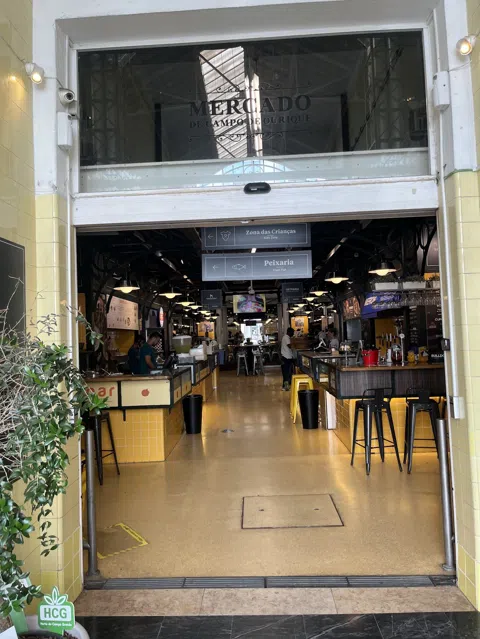
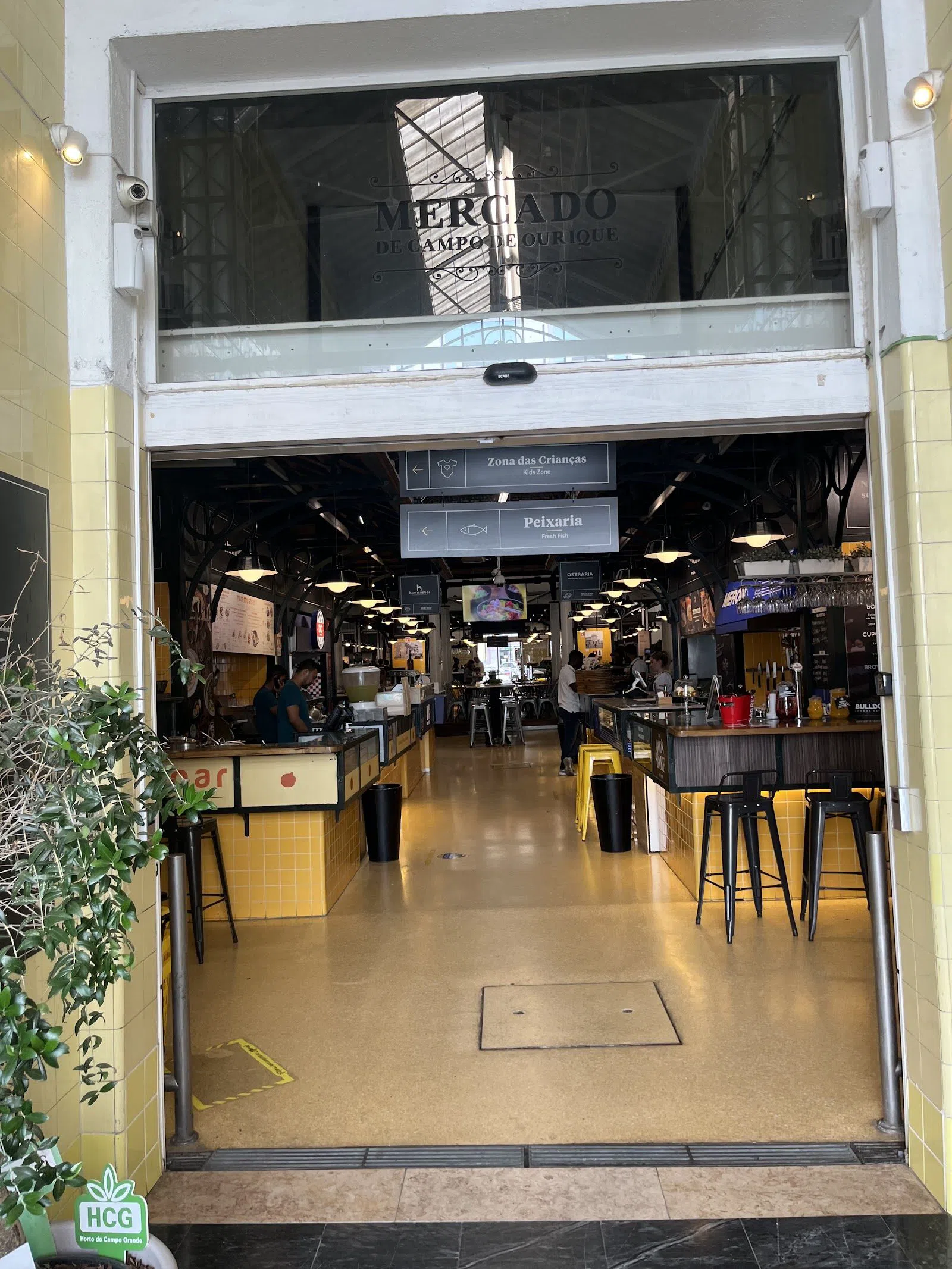
Ten minutes away, Mercado de Campo de Ourique (Campo de Ourique) solves the other problem: €15-30 a head, thirty-odd stalls, communal tables, no booking. This is a market the district actually shops in with a food hall bolted on, smaller and calmer than the big riverside one. When four people want four different things, this is where the argument ends. Open daily 10:00 to 23:00, and until 01:00 on Friday and Saturday.
Lunch on the far bank of the river
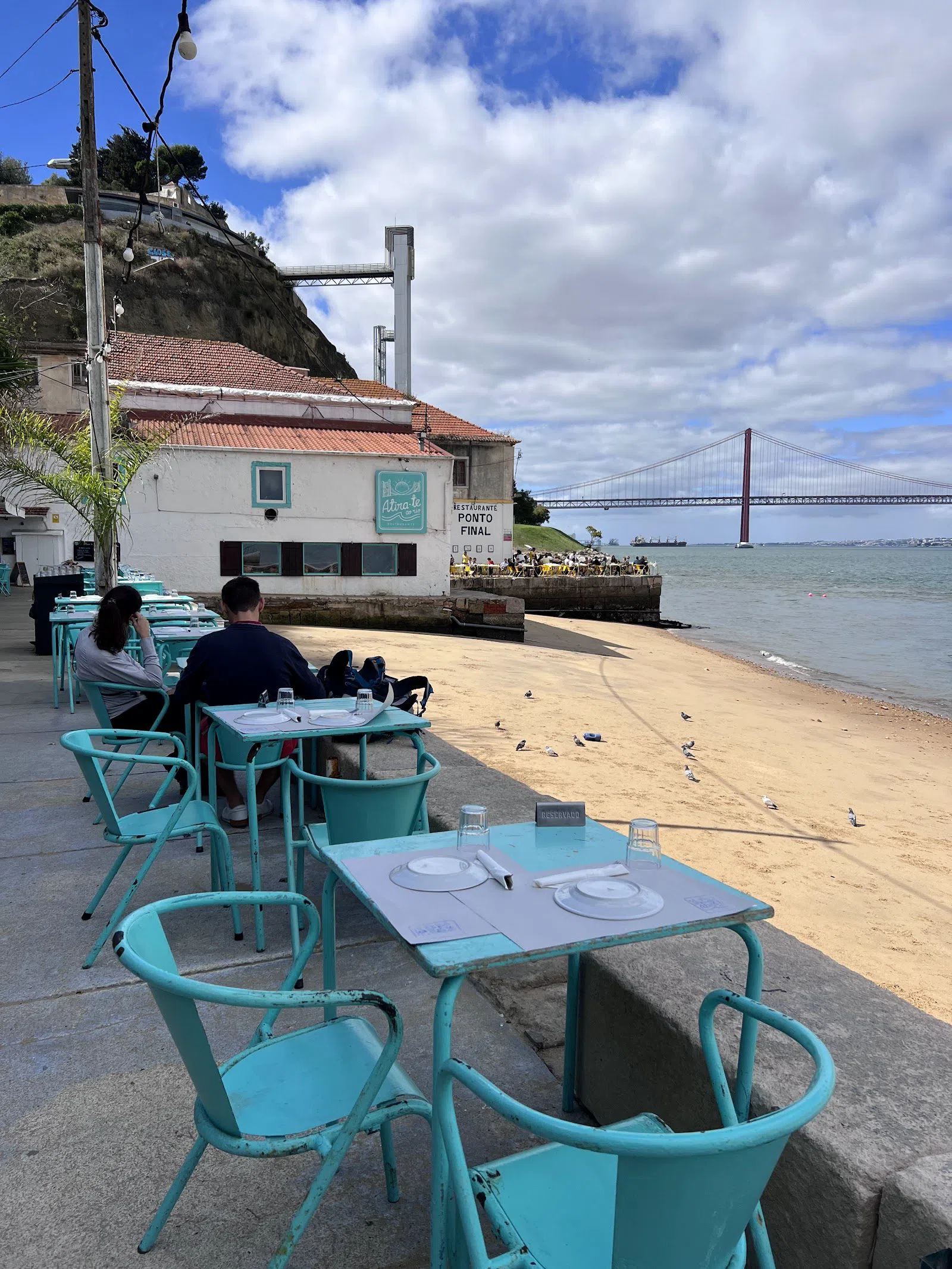
Ponto Final (Cacilhas, on the Almada side) is €30-45 a head for grilled fish eaten at a table set on the quay itself, the water a metre from your chair. Same family since 1978, and I have been twice, once in bright weather, once when the wind came up the estuary and they moved us inside, which was still better than most riverside tables in the city.
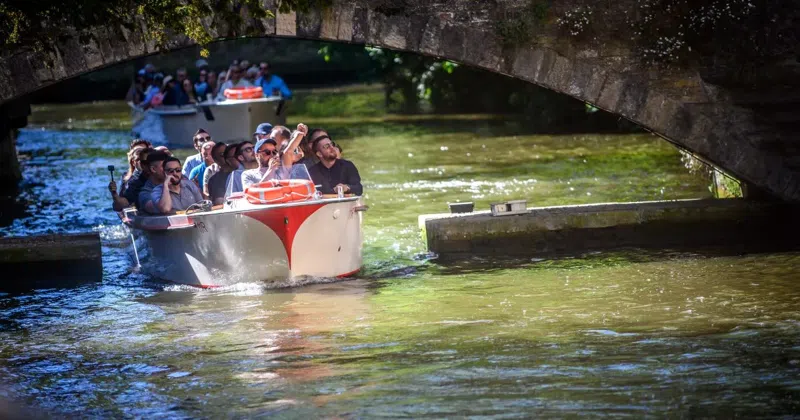
The trip out is worth as much as the lunch. Take the ferry from Cais do Sodré to Cacilhas, then walk about ten minutes along Rua do Ginjal, or take a water taxi for around €10. Stretches of the Ginjal quay are fenced off for structural works, so follow the signposted route rather than improvising along the water. Waterfront tables need an email ([email protected]) one to four months ahead, which sounds absurd until you see how few tables there are. Closed Tuesdays. The narrow quay means very large groups are a problem; four to six is the sweet spot. Bring a layer, the river is colder than town.
Two rooms for the afternoon the rain arrives
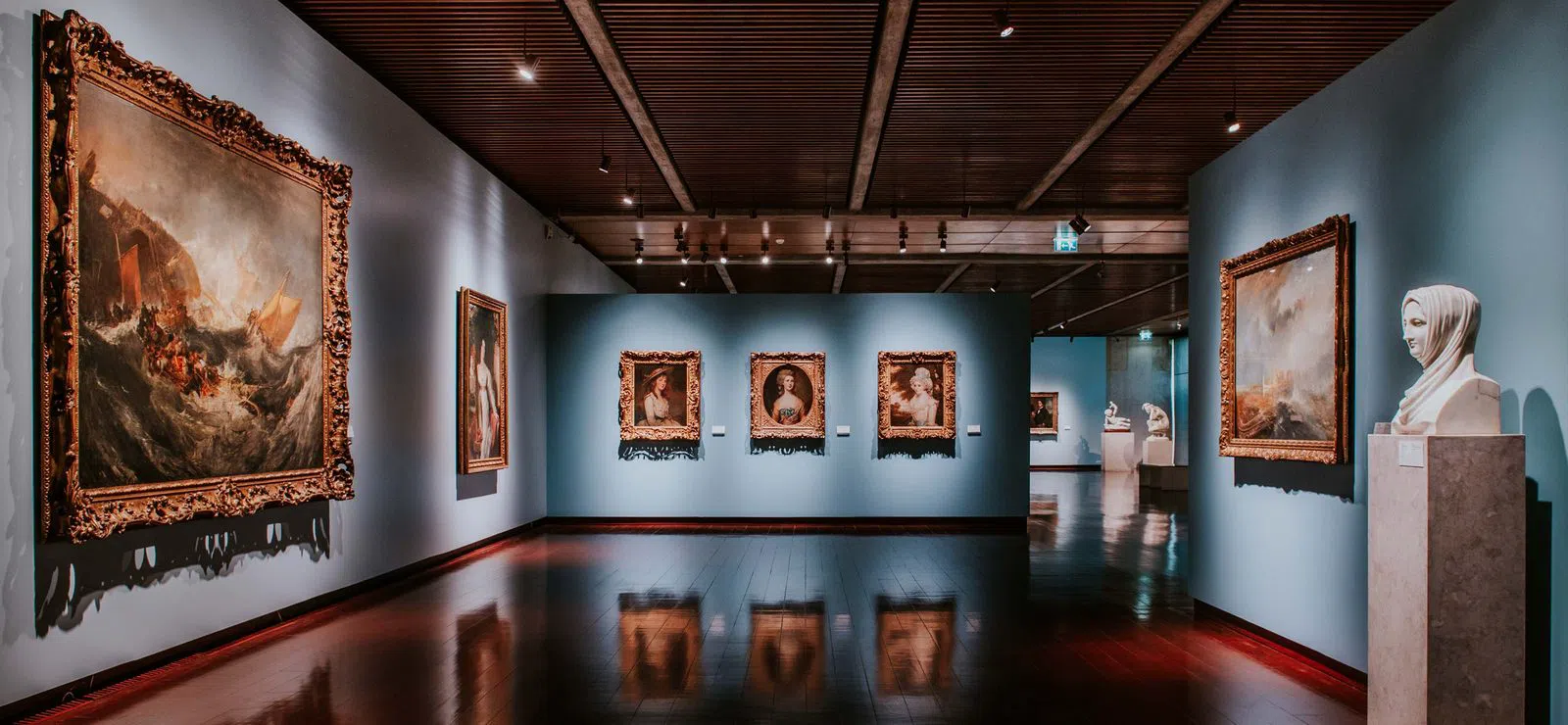
Around €10-15 gets you the collections at Museu Calouste Gulbenkian (Avenidas Novas, by Praça de Espanha), and the garden costs nothing at all. The Founder's Collection reopened on 18 July 2026 after a sixteen-month renovation, and the modern art centre's new Kengo Kuma extension sits in the same garden, so one ticket and one park buys an entire slow day. Open Wednesday to Monday, 10:00 to 18:00, closed Tuesdays. When October rain comes in sideways, this is where I go, and the garden benches are still worth twenty minutes between showers.
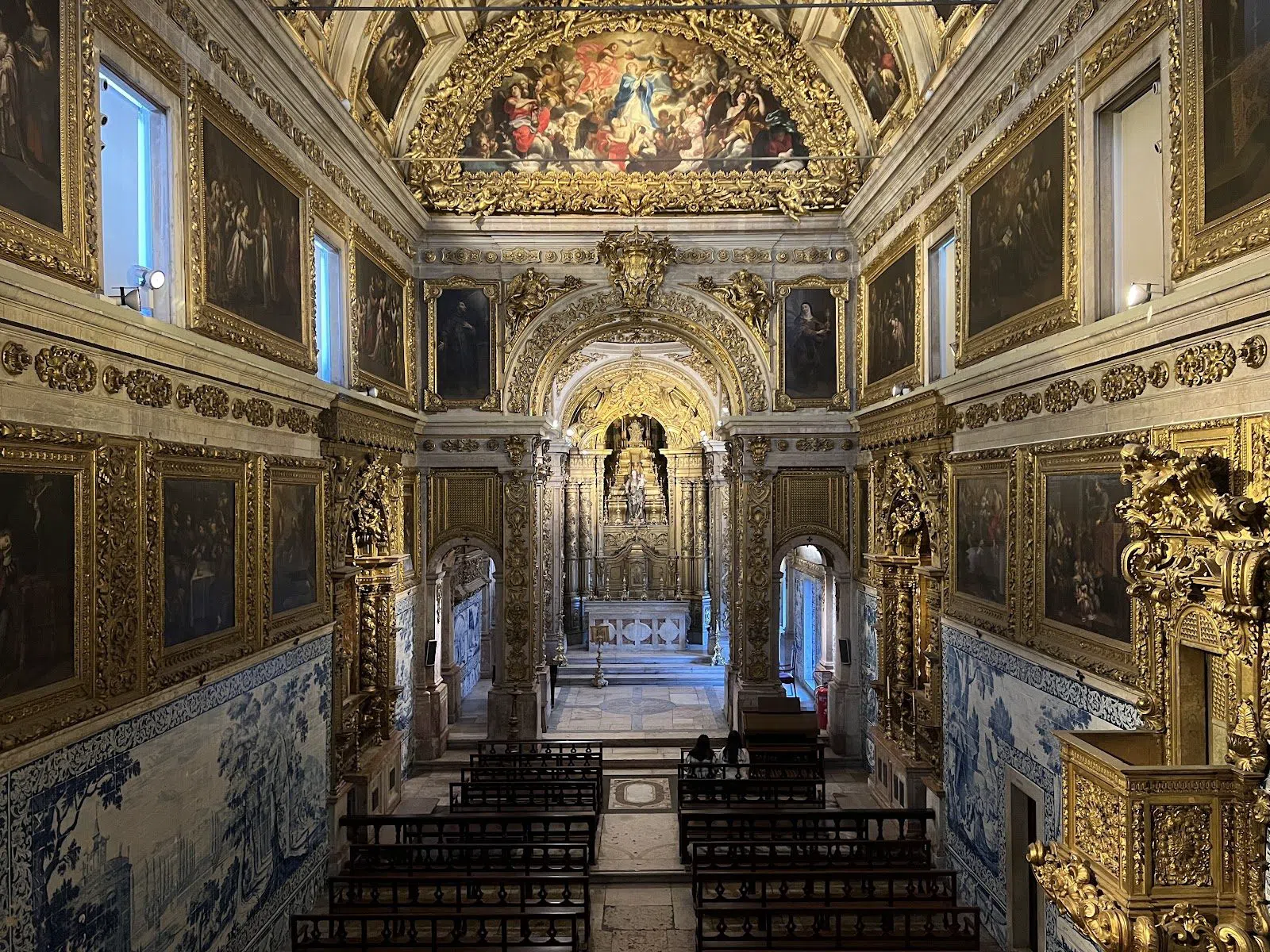
About €8, or free on Sunday mornings until 14:00, gets you into Museu Nacional do Azulejo (Beato, out east along the river). Tuesday to Sunday, 10:00 to 18:00, last entry 17:15, closed Mondays. It is never crowded. The long tile panorama of the city as it looked before the 1755 earthquake, then lunch in the cloister café, is the most restful two hours available here, and the bus ride out is a look at a part of the city most visitors never see.
Mornings that fill themselves
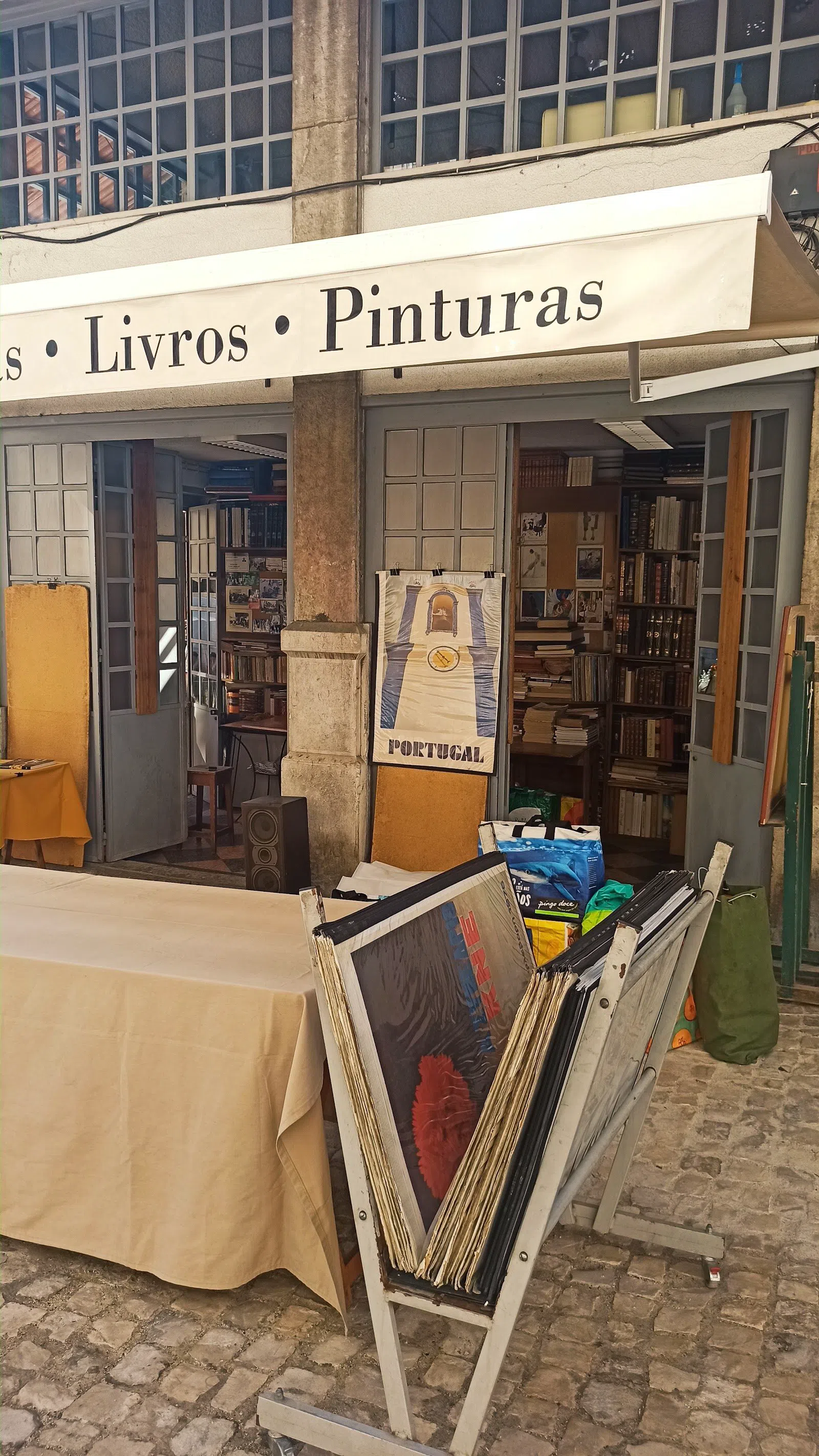
Feira da Ladra (Graça, on Campo de Santa Clara) is free to walk through, and it runs Tuesdays and Saturdays only, 09:00 to 18:00, though plenty of traders have packed up by two. Bring cash; the stalls don't take cards. Prices are higher than a true flea market, so haggle and treat it as a wander rather than a shopping expedition. Then walk downhill through Alfama with no destination, which is the correct way to spend a Tuesday morning in October.
A couple of euros on a Navegante card puts you on the Eléctrico 24E (Príncipe Real to Campolide), restored after decades out of service and still ignored by the crowd queueing for the 28. Twenty minutes uphill, roughly every 15 to 20 minutes, from about 07:00 to 20:05 on weekdays, with a later start and earlier finish at weekends. Buying a single on board costs more than tapping a Navegante. A small group is fine; a party of eight will not get seats together at a busy hour, so split up and meet at the top.

Sintra is better in October damp
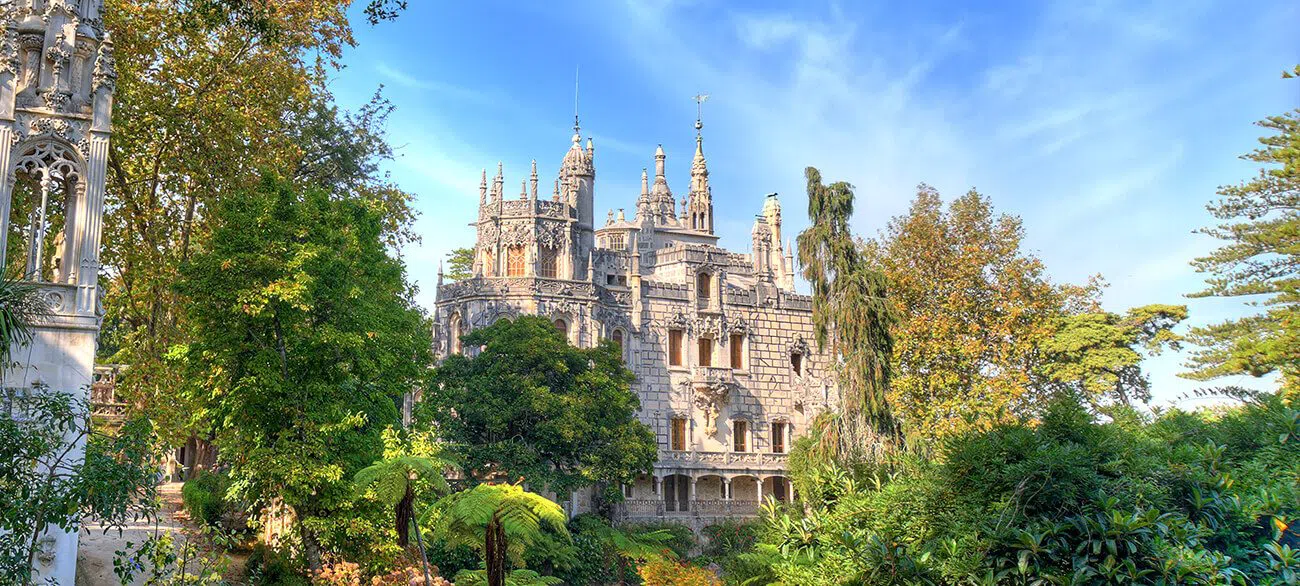
€15 for adults, €10 for youth and seniors, free under six, gets you into Quinta da Regaleira (Sintra), and October is when it comes into its own: the moss is wet, the initiation well drips, and the crowds that make August unbearable are gone. Entry is in timed 30-minute slots with a one-hour grace period, and you should book online in advance. October to March opening is 10:00 to 18:30, last admission 17:30. Book the earliest slot, take the tunnels and grottoes slowly, and skip the palace queues entirely.
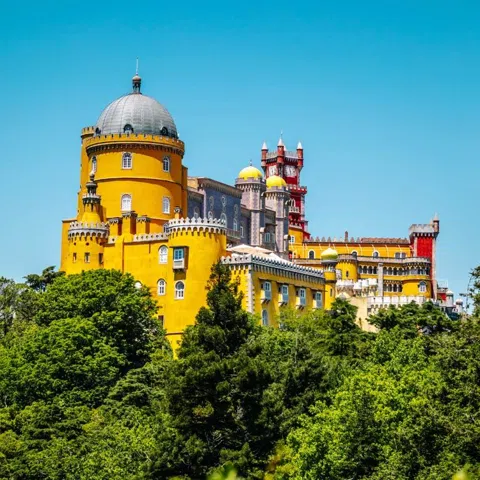
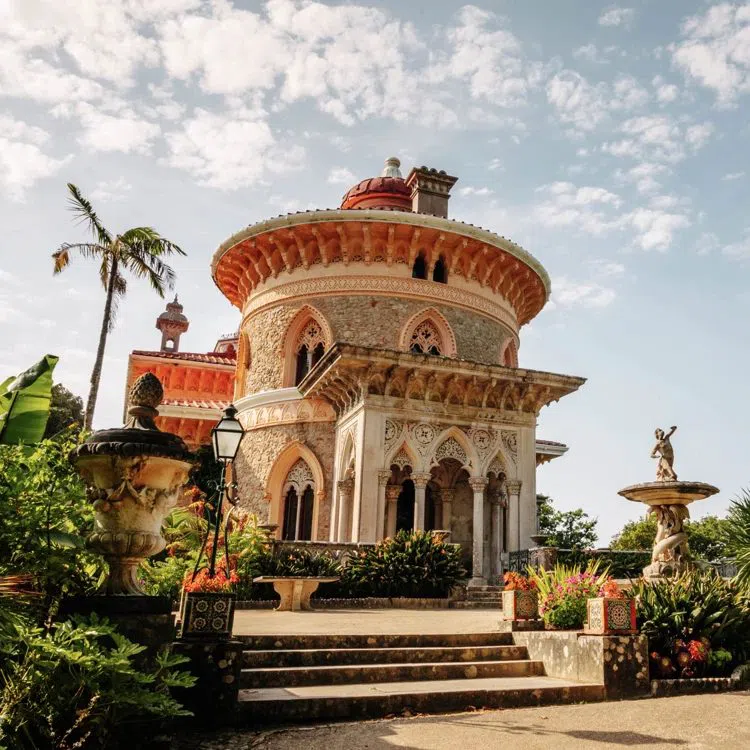
€12 adult, €10 for six to seventeens, €6.50 senior, is the calm half of the same day at Parque e Palácio de Monserrate (Sintra). The botanical park is enormous and you can have long stretches of it alone while Pena is full to the doors. The park opens 09:00 to 19:00, the palace 09:30 to 18:30 with last entry at 18:00, and the ticket office shuts between 12:00 and 13:00, so plan around that or buy online. Roof restoration runs into early 2027, so expect scaffolding and sheeting on the palace, which stays open. Groups vanish into the grounds without bothering anyone.
Give the coast a whole day, not an hour
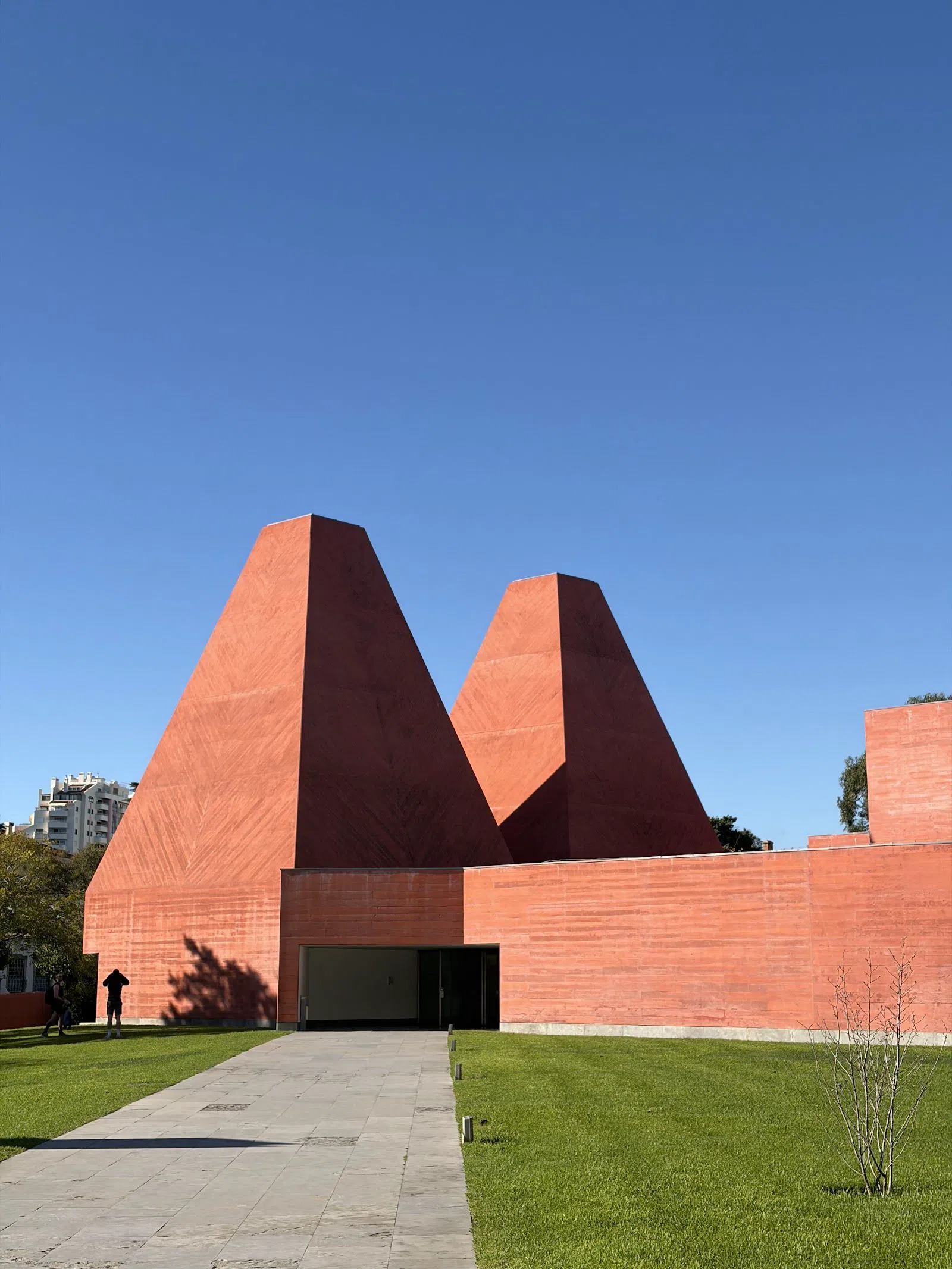
€5 gets you into Casa das Histórias Paula Rego (Cascais, ten minutes' walk from the station), and it is the reason to give the coast a full day. Portugal's greatest modern painter in a building that would be worth the train on its own, and it works precisely when October turns wet. Tuesday to Sunday, 10:00 to 18:00, last admission 17:40, closed Mondays. Easy for groups, and small enough that nobody gets bored.
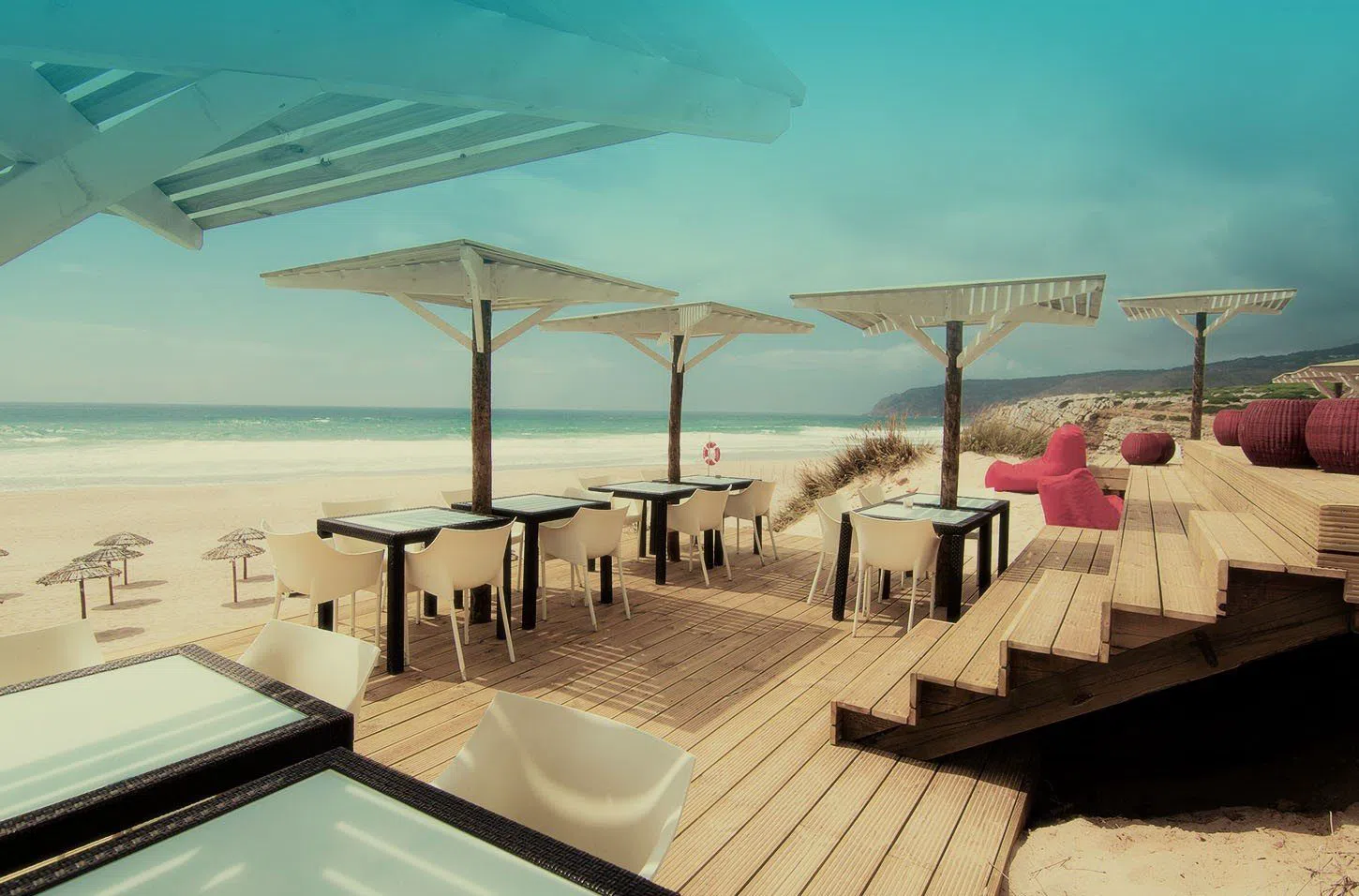
Then Bar do Guincho (Guincho, on the Cascais coast) at €25-45 a head, going since 1987 and open all year, daily from around midday to 23:45. The summer beach kiosk operation only runs June to September; the bar and restaurant is the year-round part. I've eaten here twice in cold months and both times was glad of the big terrace and a bowl of something hot. The sea in October still sits around 19 to 20 degrees and people do swim, but the wind at Guincho has teeth and it is always colder than town, so bring a proper layer, not a cardigan. Book at weekends.
Three hours on the Sado for the dolphins
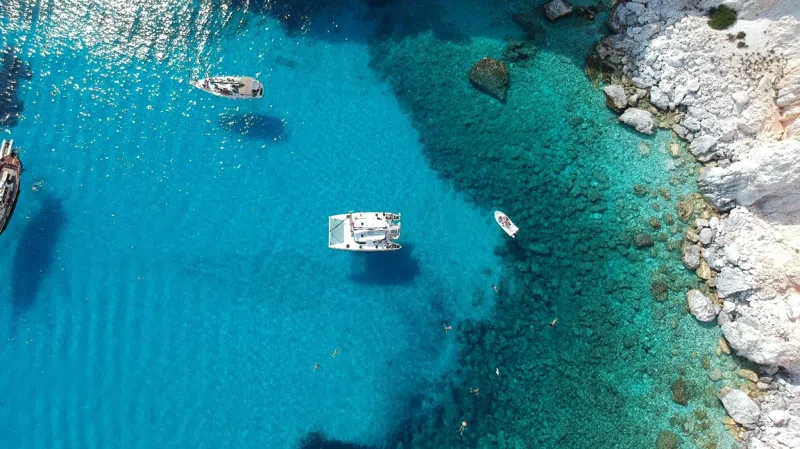
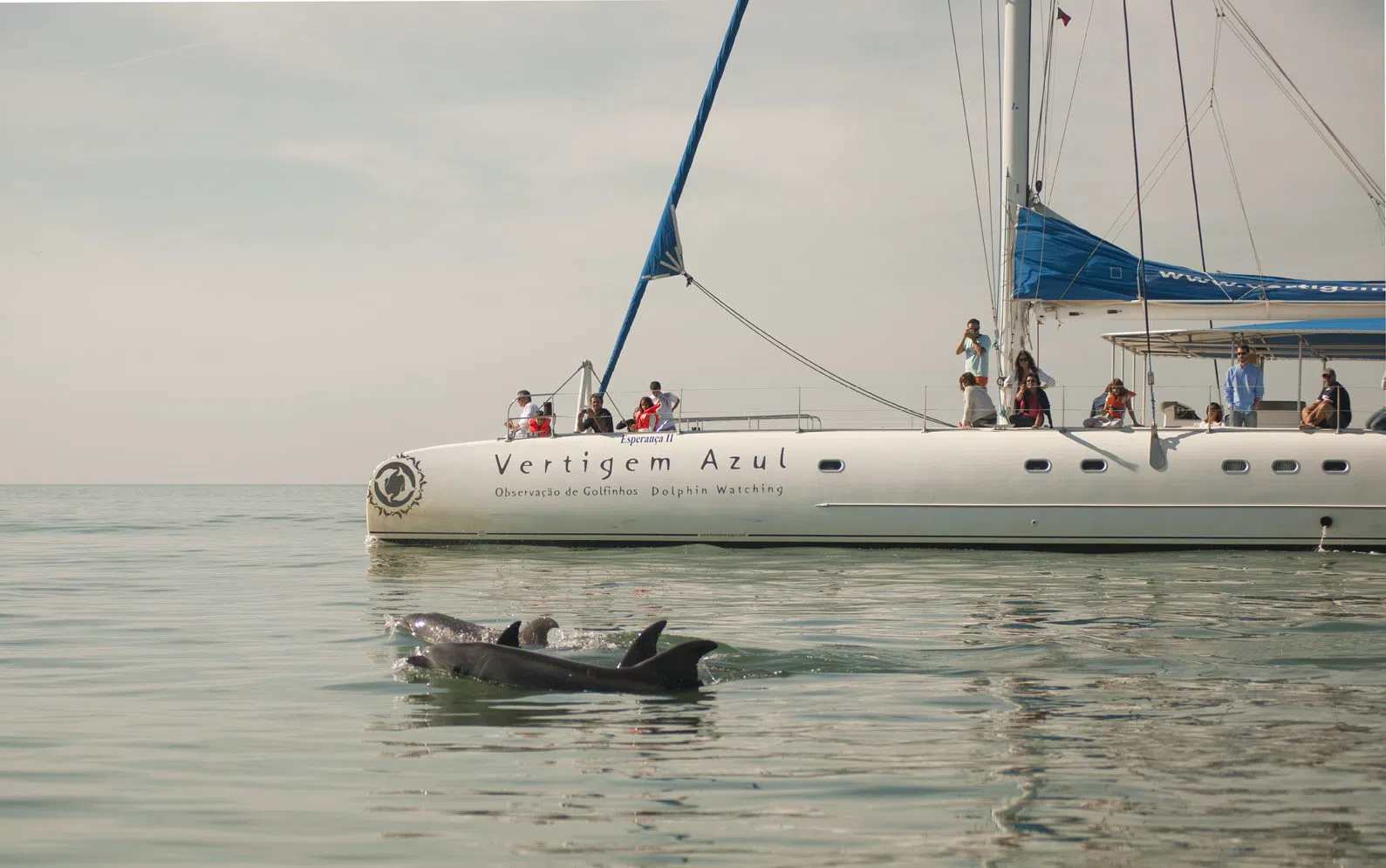
Roughly €40-55 per adult buys a three-hour-plus catamaran trip with Vertigem Azul (Setúbal, on the Sado estuary), the pioneering operator on that water for over twenty years. The estuary's resident bottlenose pod, about thirty animals, is one of very few in Europe, and this is a proper wildlife trip rather than a spectacle: sightings are likely, not guaranteed, and anyone promising otherwise is selling. The catamaran is built for groups. Book ahead, and expect autumn weather cancellations, so check the forecast the night before and keep the day flexible. Pair it with lunch by the market and go home tired.
Getting around, paying and what October actually costs
Buy a Navegante card at any metro station on arrival and top it up; it covers metro, buses, trams including the 24E, and the Cascais and Sintra trains. Sintra trains leave from Rossio, coast trains from Cais do Sodré, and both run frequently enough that you don't need to plan around a timetable. The Cacilhas ferry also goes from Cais do Sodré.
Carry cash. Feira da Ladra is cash-only, several market stalls prefer it, and the water taxi across the river is about €10. Everything else takes cards.
On timing: the clocks go back on 25 October 2026, so plan outdoor things for the front half of the day after that date, because dark arrives before six. Check closures before you set out, because they are not uniform. Ramiro, Nunes and both the Azulejo museum and Casa das Histórias close Mondays; the Gulbenkian and Ponto Final close Tuesdays; Feira da Ladra only exists on Tuesdays and Saturdays.
On money: a market lunch at €15-30, a museum at €5-15 and a €40-60 seafood dinner is a realistic day at around €80-110 a head before a bed, and you can halve it by making the big seafood meal lunch instead. Do that on a wet Wednesday and you'll see why I don't rush October. Rooms are cheaper than in summer and the good ones still go early, so start with a Lisbon hotel search, and if you're building the rest of the trip around this, the wider Lisbon guide covers the districts and the basics.
One last thing. Pick three of the days above and leave the rest empty. Every October I watch people try to run all of it in five days, and the only thing they remember afterwards is the queueing.
Before you go
What is the weather actually like in Lisbon in October?
Afternoons sit around 21 to 22°C with long yellow light, evenings cool off fast, and rain comes in showers rather than all day. The sea is still around 19 to 20°C. The clocks go back on 25 October 2026, so it's dark before six for the last week of the month: after that date, do the outdoor things in the morning.
Do I need to book Lisbon's seafood restaurants in advance?
Yes, but the lead times differ. Cervejaria Ramiro books online with a €25 per head deposit credited to your bill, though it holds no reservations after 19:30, so arrive later and you queue; parties over six have to email [email protected]. Sea Me's peak dinner slots go days ahead. Ponto Final wants an email one to four months out for a waterfront table.
Sintra or Cascais if I only have one day out of the city?
Sintra if you want atmosphere and don't mind hills and damp: Quinta da Regaleira on the earliest timed slot, then Monserrate's park for the quiet half. Cascais if the forecast is bad or you're travelling with people who want a slower day. Casa das Histórias Paula Rego is €5 and indoors, and Bar do Guincho opens year-round with a terrace that works in wind.
Can you still swim near Lisbon in October?
The water is around 19 to 20°C, so yes, plenty of people do. The catch at Guincho is the wind, which blows constantly and is always colder than in the city, so bring a real layer for afterwards and don't go by the temperature reading alone.
Which places are closed on which days?
Mondays: Cervejaria Ramiro, Nunes Real Marisqueira, Museu Nacional do Azulejo and Casa das Histórias Paula Rego. Tuesdays: Museu Calouste Gulbenkian and Ponto Final. Feira da Ladra runs only on Tuesdays and Saturdays, 09:00 to 18:00, with many traders gone by 14:00. Mercado de Campo de Ourique is open every day.